
Retracing the Iqbalian Approach to Education
On Allama Iqbal's vision for Muslim education — knowledge united with spiritual abundance, intellectual freedom, and the Prophetic example.
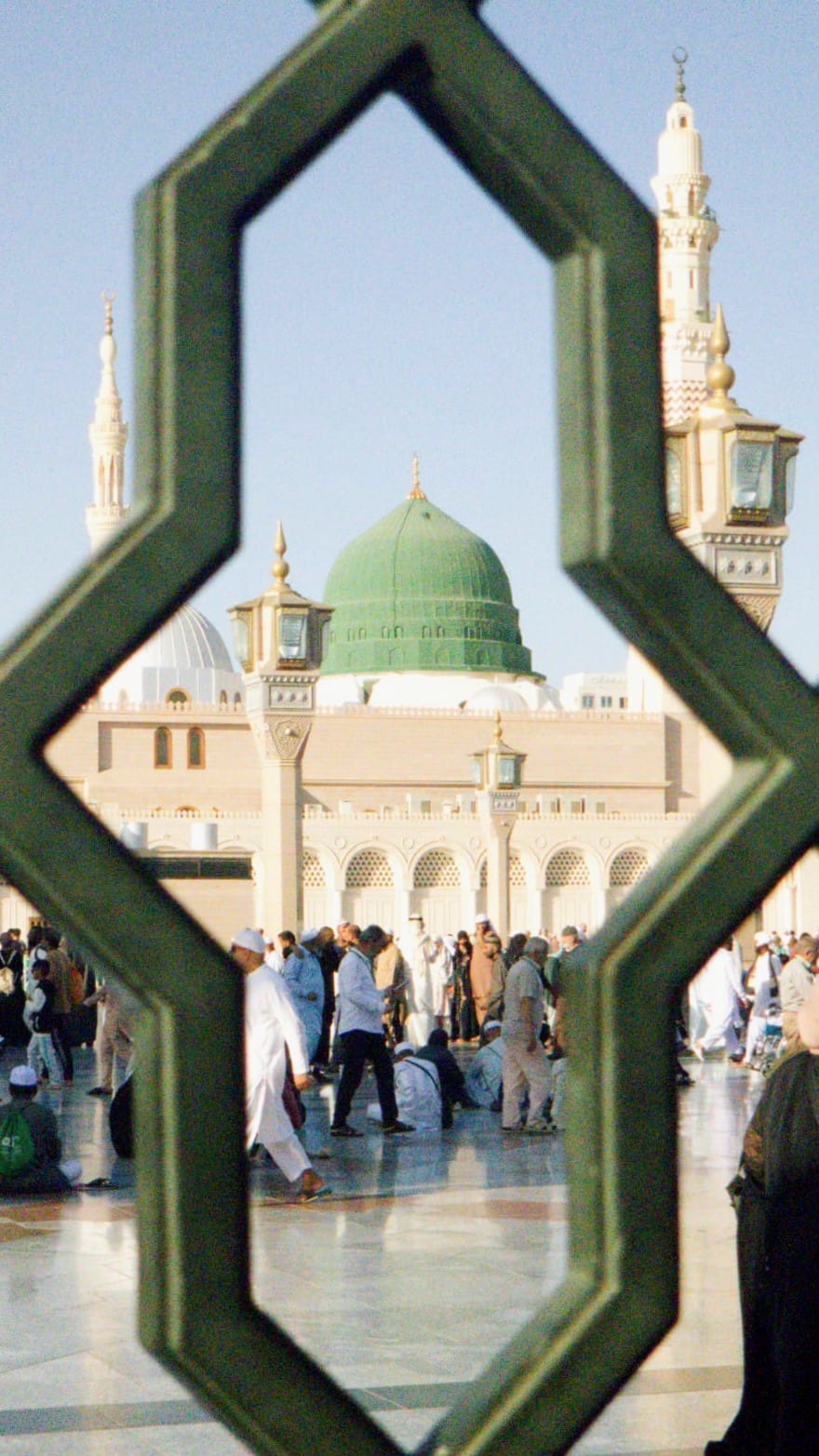
In an age where humanity found itself in the darkest of ditches, the Holy Prophet ﷺ was sent by the Almighty as a clear light. He ﷺ was sent with guidance and the true Religion so that he may elevate it over all other religions.[1] The quadruple duties of the Holy Prophet ﷺ are outlined in the Holy Qur’an [2:151][2] and can in sum be encapsulated into two aspects: education (taʿlīm) and upbringing (tarbiyya).
This is supported by the prophetic traditions in which the Holy Prophet ﷺ stated:
“Verily, I have been sent as a teacher”[3] and “Verily, I was sent to perfect noble character.”[4]
Enlightening mankind and strengthening their moral fibre is the very essence of his ﷺ prophetic mission. The Holy Prophet ﷺ aspires to guide humanity towards the zenith of excellence by nurturing and improving their innate moral, ethical and spiritual qualities and aids anyone embarking on this transformational journey.
Islam’s Enduring Commitment to Education
From its very inception, Islam has been an educational movement with special emphasis on nurturing and upbringing. Among the primary prophetic responsibilities, the perfection of morality is at the topmost tier. The task in hand is to prompt an evolution to achieve one’s raison d'être. The process of nurturing and cultivation, by migrating from mere individual existence (ādamiyya) to realising one’s full human potential (insāniyya), ultimately results in perfecting moral excellence.
The first revelation emphasises the educational mission of Islam:
اِقْرَاْ بِاسْمِ رَبِّكَ الَّذِیْ خَلَقَ
“Read in the name of your Lord, Who created (everything)”.[5]
The command to “read” points towards the educational sphere, whilst the characteristic of Allah Almighty in this verse signifies nurturing and upbringing. Both education and upbringing are intricately woven with the understanding of the Divine. The essence of both thus becomes to attain the gnosis of God the Almighty; acknowledging absolute obedience to Him and the awareness of His Omnipresence. If this aggregate remains unbroken, we are without a doubt adhering to the prophetic path and actively striving towards achieving the goals of Islam.
Apart from the corner in the mosque allocated to the people of al-Ṣuffa, often dubbed the first university of Islam, education was not institutionalised. However, education and upbringing was the focal point of every gathering – be it daily prayers, Friday and Eid sermons, or the Pilgrimage. Every assembly of the Holy Prophet ﷺ, the Companions and their successors were arenas of knowledge and spirituality. When this culture was firmly established and fortified, the need arose to establish institutions in order to systematise and streamline the knowledge that now flowed in abundance. It is, however, a shame that we gradually lost track of our purpose in the race of grandeur and eminence. What was once a vibrant essence had now become lifeless.
Challenging Colonialism and Intellectual Stagnation
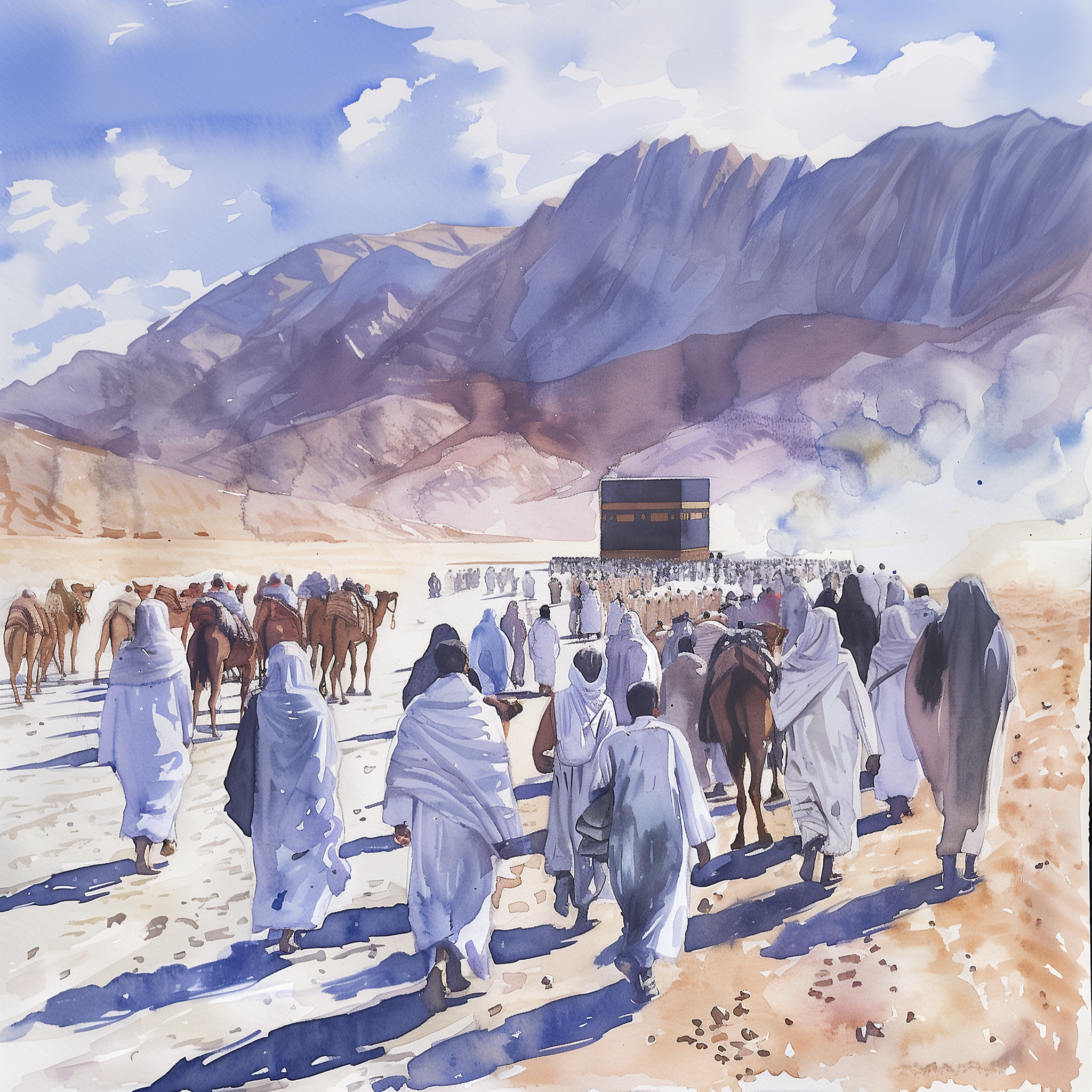
Iqbal opened his eyes in a time and age of subjugation. Following the 1857 War of Independence, the Muslim decline was marked by intellectual stagnation, regression and lack of visionary outlook. Consequently, the Muslims of India were impotent and powerless to face the challenges that came along with the Industrial Revolution.[6] The certitude in their once uplifting faith had weakened, resulting in eroding self-confidence.[7]
British imperialism caused a comprehensive and multifaceted upheaval on economic, social, educational, cultural and civilisational levels. This led Indian Muslims to shift their focus from global aspirations to more pressing issues of daily survival. As a result, a number of individuals from various walks of life, including court musicians and religious scholars, were forced to commercialise their knowledge and skills. They were left preoccupied with employment and sustenance rather than active participation in the broader global arena.[8]
Realising the importance of a collective awakening among his people, Iqbal used his great intellectual acumen to awaken the nation from inertia and help them break free from their limitations. By sharing his deep philosophical thoughts, Iqbal sought to revitalise and renew the way Islamic thought was viewed.
Through his thoughts and ideas, Iqbal elaborated on the philosophy of the Self, which entails achieving self-awareness through the process of self-purification.[9] He championed the idea that this inner transformation is achieved through sedulous, diligent struggle and action. Life is not without meaning. A meaningful life inspires a person to actively change the course of adverse conditions by mobilising their own inner strength.[10] Being aware of one’s individuality and utilising one’s unique qualities represents the peak of achievement in life.[11]
Iqbal’s God-given ability was to synergise the ancient with the modern. He innovatively linked upbringing to the concept of “poverty”[12] (faqr), while retaining the core of education: knowledge (ʿilm).
Unveiling the Essence of Knowledge
Possessing knowledge can be described as achieving a thorough and definitive understanding of a subject matter. This entails removing all forms of ignorance and uncertainty. Knowledge that is true in its essence, leaves no room for no space for doubt, ambiguity and confusion. It is a revelation of truth. When what was previously hidden is revealed through understanding, the existence of this knowledge is confirmed.[13]
The Holy Qur’an says that nothing is hidden from God.[14] Nothing can ever be hidden from Him, because His Knowledge is eternal. What is elucidated in this verse is the importance and extensiveness of God’s Knowledge. Does this mean that something was hidden before and is now revealed? Nay, this is only the case of the erroneous knowledge of His creation. What may be inferred is that true knowledge is characterised by awakening a sense of understanding by lifting the veils of ignorance.[15]
In the initial chapter of his Reconstruction,[16] Iqbal reviews the concepts of human thought and its limitations starting from Socratic, through Neoplatonic and ending at Kantian philosophies. He ensues to question the notion that human thinking is limited and unable to grasp the infinite.[17] Iqbal argues that logical understanding tends to simplify. By finding similarities, and thereby forming superficial connections, human intellect is unable to capture the very essence of reality. However, he believes that humans do have the ability to see past finite concepts, and consequently, gain insight into a deeper understanding of the dynamic whole.[18]
Iqbal believes that the presence of something entirely infinite makes finite thinking and knowledge acquired from then on feasible. They are not mutually exclusive. This is possible because human thought cannot be restricted and is open to everything beyond itself. Iqbal’s thesis is that human thought is a connection between the finite and the infinite.[19]
Notwithstanding criticism, from his own peers and students[20] alike, Iqbal’s approach undoubtedly remains groundbreaking. After trying to understand Iqbal’ approach to knowledge and education - with my own limited mental faculties - I have come to the conclusion that he wants us to achieve a goal more grand and loftier than the human itself. Knowledge should be a means to reach the threshold of the infinite, namely God the Almighty. Nonetheless, Iqbal is well-aware of the intellect’s capabilities and its inability to obtain this goal.[21] In order to traverse beyond its theoretical restrictions, the intellect is in need of something cosmic; fathomless, practical and dynamic. As he so beautifully puts it:
Khirad ne keh bhi diyā ‘lā ilāh’ to kyā ḥāṣil
Dil-o-nigāh musalmāñ nahīñ to kuch bhi nahīñ
If intellect says ʺNo God but Heʺ, it brings no gain:
No worth at all, unless affirmed by heart and brain.[22]
An Abraham among Idols
The lexical meaning of faqr is that of destitution, indigence, and poverty. In Iqbal’s view, as well as in the teachings of ancient Sufi masters, faqr is a state where an individual liberates themselves from self-serving desires[23], attains sincerity, purity[24], and consistently seeks to please God in every aspect of life.[25] Consequently, one attains objectivity and embarks on a path with a clear direction, overcoming obstacles hindering progress towards the ultimate goal.[26]
A true faqīr harbours no fear, refuses to bow down, and compromises neither conscience, faith, morals, profession, honesty, nor knowledge. His character is immune to wealth and worldly status. He attains richness through ‘poverty,’ transcending all material dependencies.[27] It paves the path to leadership and authority.[28]
Iqbal derives his inspiration of faqr directly from the Holy Prophet ﷺ.[29] A person once came to the Holy Prophet ﷺ and confessed his love for him ﷺ thrice. Upon hearing this he ﷺ said: “If you love me, you must prepare armour for poverty, because poverty comes more quickly to someone who loves me than the flood to its climax!”[30]
A study of history reveals that only a handful of prophets were given kingdoms, while the majority lived lives marked by poverty. It is a recurring theme that knowledge and poverty often go hand in hand. The Holy Prophet ﷺ himself regarded his discretionary poverty[31] with honour, a tradition that, despite scrutiny, holds true in essence.[32] True believers should adopt an attitude of gratitude towards God regardless of circumstances because one is treading the prophetic path. Trials and tribulations may endure for a time, but the dignity and spiritual closeness to God that knowledge brings is unparalleled by material wealth.[33]
In a letter to his son, Javid, Iqbal addressed the youth of the Muslim Umma and emphasised the same message:
Mairā ṭarīq ʾamīrī nahīñ, faqīrī hai,
Khudī na baich, gharībī main nām paidā kar!
The way of the hermit, not fortune, is mine;
Sell not your soul! In a beggar’s rags shine.[34]
Fusing Knowledge and Spiritual Abundance
About the relationship between knowledge and poverty, Iqbal says:
ʿIlm ka maqṣūd hai pāki-i ʿaql-o-khirad
Faqr ka maqṣūd hai ʿiffat-i qalb-o-nigāh
By means of learning, intellect, no doubt, become refined and pure:
Faqr makes the heart and gaze of man from filth and dross secure.[35]
Taʿlīm serves to cleanse the faculties of the mind—intellect, wisdom, reasoning, understanding, and consciousness—from the influences of materialism. With a purified intellect, one’s thoughts, approach, and decisions become clear. On the other hand, faqr serves to refine the heart and vision. When the heart, the seat of desires, inclinations, and passions is purified, all traces of greed, lust, malice, betrayal, and selfishness are dispelled. These are the dual objectives of education and upbringing.
In Iqbal’s era, Muslims shifted their focus from collective goals to individual pursuits. When every member of society becomes engrossed in their own concerns, the collective progress of the community stagnates. The pursuit of knowledge is reduced to obtaining a degree solely to ensure a comfortable lifestyle. Consequently, the purpose of life is confined to personal gain, with little regard for broader societal advancement.[36]
In another context, he expresses:
Woh ʿilm nahīñ, zahr hai aḥrār kay ḥaqq main
Jis ʿilm kā ḥāṣil hai jahāñ main dō kaf-i-jau
That knowledge, it is not, but poison for the people free,
The knowledge which brings just two cups of barley wheat.[37]
If the pursuit of knowledge leads one away from purposefulness, it means that the mind is shackled by personal interests and economic gains. One is de facto imprisoned. This obliviousness makes one lose sight of the transcendent and independent essence of life – the divine reality inherent in human existence. If acquiring knowledge is solely for securing material needs, how is one different from a prisoner?
Iqbal directs his critique towards the fundamental cause of this trend:
Aur yeh ahl-i-kalīsā ka nizam-i-taʿlīm
Aik sāzish hai faqat dīn-o-murawwat kay khilāf
The system of education by the clergy devised,
Against faith and morals, just a collusion contrived.[38]
The education system has stripped us of our freedom, binding our lives, thoughts, intellect, and minds. In doing so, it has deprived the Umma of effective leadership, leaving the coming generations without proper guidance. This systemic flaw is a ‘conspiracy’ against religion and morality. By directing individuals to concentrate solely on their personal lives, they are rendered to become indifferent to the intellectual, moral, spiritual, and ethical decline befalling society. The educational system, persisting to this day, continues to churn out graduates focused on individualistic pursuits.
Iqbal laments:
Shikāyat hai mujhay yā Rabb! Khudāwandān-i-maktab say
Sabaq shāhīn bachōñ ko day rahay hain khākbāzī kā
O Lord, I lament from the depths of my plea,
From the masters of learning, a lesson I see,
Instead of soaring high like an eagle free,
The young are taught to scrape in the debris.[39]
Iqbal wants us to liberate our minds and expand our intellectual horizons. He envisions a return to the intellectual heights where figures like al-Ghazālī, al-Rāzī, Khayyām, ibn al-Ḥaytham, al-Bīrūnī, and ibn Ḥayyān once soared. Just as they guided humanity to new heights of understanding, Iqbal’s mission in his era, and his aspiration for us today, is for our educational institutions to embrace intellectual freedom and a methodology that reconciles knowledge with religion and morality.[40] When religious and moral values unite, individuals become humans in the truest sense. It is a process of nurturing that leads to a restoration of our innate goodness.[41]
In his view, this transformation is only attainable if the Umma returns to the pristine example set by the Holy Prophet ﷺ.[42] Even if our knowledge is limited, reconnecting with our inherent virtues will revive our spiritual essence. We will naturally develop a conscience that discerns right from wrong. In situations where we are unsure, our innate disposition will guide us back to the path of prophetic wisdom.
Iqbal says “One lesson I have learnt from the history of Muslims. At critical moments in their history, it is Islam that has saved Muslims and not vice versa. If today you focus your vision on Islam and seek inspiration from the ever-vitalising idea embodied in it, you will be only reassembling your scattered forces, regaining your lost integrity, and thereby saving yourself from total destruction.”
Notes
- They are: (1) reciting revelations, (2) spiritual purification, (3) teaching the Book, and (4) imparting Wisdom. ↑
- ibn Mājah, al-Sunan, 1/83 § 229 ↑
- al-Bayhaqī, al-Sunan al-Kubrā, 10/191 § 20571; al-Bazzār, al-Musnad, 15/364 § 8949 ↑
- The Manifest Qur’an, 96:1 ↑
- Iqbal, Dr Muhammad. 1935. “Yaqīñ, Misl-i-Khalīl Ātish Nashīnī” in Bāl-i-Jibrīl, 110. Lahore, Pakistan: Taj Company Ltd. ↑
- Iqbal, Dr Muhammad. 1936. “Tann ba-Taqdīr” in Zarb-i-Kalīm, 8. Lahore, Pakistan: Chaudhry Mohammad Hussain. ↑
- Tahir-ul-Qadri, Dr Muhammad. 2000. “Tārīkh-i Zawāl-i-Ummat” in Qurʾānī Falsafa-i-Inqilāb, Volume I, 199-202. Lahore, Pakistan: Minhaj-ul-Quran Publications. ↑
- A reinterpretation of the Sufi proverb in Arabic attributed to Imām Yaḥyā b. Muʿādh al-Rāzī which says: “Whoever came to know himself, came to know his Lord” (man ʿarafa nafsahu, fa-qad ʿarafa rabbahu). ↑
- Qadri, Dr Hussain Mohi-ud-Din. 2019. Islāmī Falsafa aur Muslim Falāsifa, 203-205. Lahore, Pakistan: Minhaj-ul-Quran Publications. ↑
- Iqbal, Dr Muhammad. 2013. “The Human Ego - His Freedom and Immortality” in The Reconstruction of Religious Thought in Islam, 76. Stanford University Press. ↑
- Here, poverty is synonymous with spiritual abundance that is given in return for lack of material possessions and desires. ↑
- al-Bukhārī, Abū Isḥāq. 2011. Talkhīṣ al-ʾAdilla li-Qawāʿid al-Tawḥīd, 84-88. Beirut, Lebanon: al-Maʿhad al-Almānī lil-Abḥāth al-Sharqīyya. ↑
- The Manifest Qur’an, 3:5 ↑
- Tahir-ul-Qadri, Dr Muhammad. 2017. ʿIlm aur Maṣādir-i-ʿIlm, 281. Lahore, Pakistan: Minhaj-ul-Quran Publications. ↑
- Iqbal, Dr Muhammad. 2013. “Knowledge and Religious Experience” in The Reconstruction of Religious Thought in Islam. Stanford University Press. ↑
- Ibid., 1. ↑
- Ibid., 2. ↑
- Ibid., 4-5. ↑
- Farooqi, Dr Burhan Ahmad. 1989. “ʿIlm aur Mazhabī Wāridāt” in Qurʾān aur Musalmānoñ ke Zinda Masāʾil, 239-257. Lahore, Pakistan: Idara-e-Saqafat-e-Islamia. ↑
- Iqbal, Dr Muhammad. 2013. “Knowledge and Religious Experience” in The Reconstruction of Religious Thought in Islam, 12-14. ↑
- Iqbal, Dr Muhammad. 1936. “Taṣawwuf” in Zarb-i-Kalīm, 29. Lahore, Pakistan: Chaudhry Mohammad Hussain. ↑
- al-Jīlānī, Sayyid ʿAbd al-Qādir. 1994. Sirr al-Asrār wa Maẓhar al-Anwār, 100 Damascus, Syria: Dar as-Sanabel. ↑
- al-Kalābādhī, Abū Bakr Muḥammad b. Isḥāq. 2011. Kitāb al-Taʿarruf li-Madhhab Ahl al-Taṣawwuf, 67. Cairo, Egypt: Maktaba al-Khanji. ↑
- al-Qushayrī, ʿAbd-al-Karīm. 2007. Al-Qushayri’s Epistle on Sufism: al-Risāla al-Qushayriyya fī ʿIlm al-Taṣawwuf, 282. Reading, United Kingdom: Garnet Publ. ↑
- Iqbal, Dr Muhammad. 1935. “Faqr kay hain Muʿjizāt Tāj-o-Sarīr-o-Sipāh” in Bāl-i-Jibrīl, 110. Lahore, Pakistan: Taj Company Ltd. ↑
- Ibid. “Jab ʿIshq Sikhātā hai Ādāb-i Khud-āgāhī”, 83 ↑
- Iqbal styles this the self-respecting and zealous poverty (faqr-i-ghayyūr). See Iqbal, Dr Muhammad. 1936. “Islām” in Zarb-i-Kalīm, 25. ↑
- He terms it the Hejazian poverty (al-faqr al-ḥijāzī). See Iqbal, Dr Muhammad. 1936. “Jāvid say” in Zarb-i-Kalīm, 88. ↑
- al-Tirmidhī. “Book of Abstinence [Zuhd]” in al-Sunan, 4/576 § 2350; ibn Ḥibbān. al-Saḥīḥ, 7/185 § 2922. ↑
- al-ʾAsbahānī, Abū Ṭāhir al-Silafī, al-ʿArbaʿūn Hadīthan Ḥaqq al-Fuqarāʾ Ahl al-Ṣuffa. ↑
- al-Anṣārī, Ibn al-Mulaqqin. 2011. Khulāṣat al-Badr al-Munīr. 2/161 § 1840. Riyadh, Saudi Arabia: Maktabat al-Rushd Nāshirūn. ↑
- Tahir-ul-Qadri, Dr Muhammad. 2017. ʿIlm aur Maṣādir-i-ʿIlm, 216. ↑
- Iqbal, Dr Muhammad. 1935. ““Jāvīd kay Nām (London main us kay Hāth kā Likhā huā Paihlā Khaṭṭ ānay par)” in Bāl-i-Jibrīl, 198. ↑
- See note 14. ↑
- Shaykh-ul-Islam Dr Muhammad Tahir-ul-Qadri, Maqasid e Taleem aur Fikr e Iqbal, YouTube, June 1, 2023, 46:07, https://www.youtube.com/watch?v=T0aALEjg8Yo ↑
- Iqbal, Dr Muhammad. 1936. “Yeh Madrasa yeh Khail yeh Ghaughāy-i-Rawā Rau” in Zarb-i-Kalīm, 169. ↑
- Ibid., “Dīn wa Taʿlīm”, 85. ↑
- Iqbal, Dr Muhammad. 1935. “Musalmāñ kay Lahū main hai Salīqa Dil-nawāzī kā” in Bāl-i-Jibrīl, 50. ↑
- See note 28 ↑
- The Manifest Qur’an, 95:49 ↑
- Iqbal, Dr Muhammad. 1935. “Dil-i-Baydār Fārūqī, Dil-i-Baydār Karrārī” in Bāl-i-Jibrīl, 58. ↑
- Malik, Dr Nadeem S., and Dr Muhammad Iqbal. 2013. “Presidential Address, Iqbal, (Godabad), 30 December, 1930” in The All India Muslim League and Allama Iqbal’s Godabad Address 1930 (Archives of Freedom Movement Volumes No. 153 & 154), 436. Lahore, Pakistan: Muhammad Suheyl Umar (Director, Iqbal Academy Pakistan). ↑
Tags