
Melodies of the Ney: The Essence of Rumi's Mathnawi
Listening to the lamentation of the reed — a journey into Mawlana Jalal al-Din Rumi's Mathnawi, the stations of the salik, and the maqamat of ʿishq.


Resonance of the Reed
بشنو از نى چون حكايت مىكند از جدايىها شكايت مىكند
Listen to the Ney (reed) how it tells a tale, complaining of separations[1]—
كز نيستان تا مرا ببريدهاند در نفيرم مرد و زن ناليدهاند
Saying, “Ever since I was parted from the reed-bed, my lament, has caused man and woman to cry.[2]
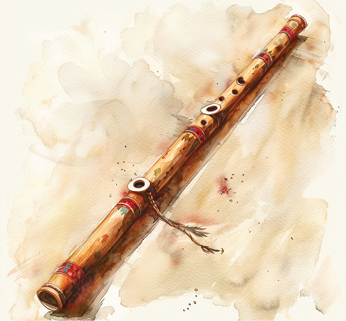
The ney is a Persian flute, made from wood, fashioned with a reed that blows out melodious and often sorrow-inducing tunes. This instrument is central to the Mevlawi orchestra, which assembles an ensemble that plays traditional Persian and Ottoman melodies. The dervish—humble mystics, seek the permission of the Shaykh, emerging into the centre of the floor, fluttering their white-skirts, turning in circles in a state of mystic ecstasy. The sema’ renders the multiple inner esoteric conditions of the dervish. The sema’ compels participants forget their own existence for a few moments in absolute contemplation of the Divine.
Mawlana Jalal al-Din Balki Rumi RA pours ink onto the parchment and writes: Listen to the Ney how it tells a tale, complaining of separations. The ney plays a painful and sorrowful melody retelling a tale of its firaq—separation from its reed-bed. The ney is made from wood, and has been plucked from a tree, after which it is fashioned by master artisans into the flute. The ney cries out for its homeland –the reedbed, and each note within its melody contains a vibration of this pain. The huzn—grief of this melody is sometimes presented in the maqam—musical mode of nahawand, ‘ajm, hijaz, bayati, kurd, saba’ and rast.
The Path of ‘Ishq
Each maqam which is a musical mode, but also a station, reminisces the various tragedies of the path of ‘ishq –divine love. Nahawand exhibits reminders of ‘ishq and mystical ecstasy. Hijaz delivers an account of barren desserts and empty promises. ‘Ajm reminds of the grief of far travels in distant lands. Saba’ cries of misdeeds in the courts of the beloved. Bayati and rast exchange a conversation on what could and would have happened? Kurd consoles the sufferer of this tragedy, convincing them that the memory is sufficient.
Petal Plucked From Its Bosom
وَ الۡاَرۡضَ مَدَدۡنٰہَا وَ اَلۡقَیۡنَا فِیۡہَا رَوَاسِیَ وَ اَنۡۢبَتۡنَا فِیۡہَا مِنۡ کُلِّ شَیۡءٍ مَّوۡزُوۡنٍ ﴿۱۹﴾
Mawlana Rumi’s RA opening couplet is a parable for the separation of the spirit from its homeland in the divine kingdom. [Qur’an 15:19 –add from Manifest with Arabic]. When the Almighty fashioned the spirit Himself and blew His own spirit into the human. The ney cries of its separation from its reed-bed, and the enlightened mystic cries of realisation of their separation from the presence of the Almighty. Then, the ney’s melody compels men and women to cry who recall their own tragedies. Here, the mystic utters reminders of the homeland, causing people to erupt into tears. The pain of being away from the Almighty and His presence is unbearable for those touched by this tale.
سينه خواهم شرحه شرحه از فراق
تا بگويم شرح درد اشتياق
I want a heart pained by separation, that I may unfold my pain of longing.[3]
Those afflicted by the grief of severance, like a petal plucked from its bosom, search for others who have yielded similar experiences. So that they may unravel the pains of severance and mystic secrets that emerged amidst.
The Flying Sun
Mawlana Jalal al-Din Rumi RA is indicating the tale of the meeting of the two seas. Shams al-Din Muhammad bin ‘Ali bin Malikdad was known as Shams-i-Perindei—the flying sun. He was a travelling mystic and enlightened scholar who roamed around towns in search of esoteric secrets. Shams-i-Tabrez RA, as he is widely known, was instructed by his spiritual master Shaykh Kamal al-Din Jund rh to seek a burnt-hearted man in Rum who desired a mentor burned by the flames of divine love –who could set his own heart a lit. In muraqaba—contemplation, Shams-i-Tabrez RA received an indication to travel to Konya. While arriving in Sarae Karawan Inn, Shams-i-Tabrez RA upon inquiring about the most prominent figure in Konya was informed about Mawlana Jalal al-Din Rumi RA.
As a travelling mystic, wandered and merchant, Shams-i-Tabrez entered the classroom of Mawalana Rumi who was instructing students in his medrassa—religious seminary on classical Islamic sciences. There were numerous books and manuscripts piled around Mawlana Rumi RA. Witnessing this orthodox spectacle, Shams-i-Tabrez pointed to the books and asked Mawlana: [Shaykh-ul-Islam, ‘Itikaaf Lectures 2018]
اِیں چیست؟
“What is this?”
Mawalana Rumi RA dismissively responded:
!یہ آں چیز است کہ تو نمی دانی
“This is something that you will not understand!”[4]
In a moment of jalal—mystic fury, Shams-i-Tabrez lit Mawlana Rumi’s books and manuscripts on fire. This was a lifetime collection of knowledge which was now on fire and spiralling into ashes. As Shams was walking away, Mawalana Rumi picked up his books and manuscripts and was stunned to find nothing had burned!
Mawlana Rumi astonished, interrogated Shams-i-Tabrez:
اِیں چیست؟
“What is this?”
Now Shams-i-Tabrez responded dismissively:
یہ آں چیز است کہ تو نمی دانی
“This is something that you will not understand!”
In The Crucible of Divine Love

This mystical occurrence sent Mawlana Jalal al-Din Rumi’s existence into a frenzy. Mawlana’s heart revolted against decades of rational idioms and intellectual imprints. A fire erupted in his heart, burning him inside –the flames of ishq-i-ilahi –intense divine love. Mawlana Rumi set aside his instruction and medrassa and sought the mentorship of Shams-i-Tabriz. Mawlana Rumi had spent thirty-seven years absorbing rational sciences and now for three years in isolation and seclusion, would sit through the trials and examinations of divine ‘ishq and ma’rifa—gnosis.
In his own words:
مو لوی ہرگز نہ شد مولا ئے روم
تا غلامِ شمسِ تبریزی نہ شد
“Mawlawi did not become Mawla-i-Rum, Until he adopted the servitude of Shams-i-Tabrez”.
Before becoming a disciple of Shams-i-Tabrez RA in the path of esoteric secrets, mystic realities, gnosis and ‘ishq-i-ilahi, Mawlana was only Mawlana –a rational scholar. Nevertheless, after observing the rites of passage of divine love under the supervision of Shams-i-Tabrez, Mawlana became Mawla-i-Rum—the great mystic saint, possessor of divine realities and poet who has caused many to weep in the way of the Almighty. It was only after Mawlana Rumi RA submitted his ‘aql—reason in the court of Shams-i-Tabrez and became a customer of ‘ishq that Mawalana emerged at the pinnacle of his station.
Seeking the companionship of those whose hearts have been bestowed with esoteric secrets, mystical realities and gnosis is a central prescription of the Mathnawi. Mawla-i-Rum RA and Shams-i-Tabrez RA exchanged spiritual ma’arif—realities and hikam—wisdom with each other. Much like the Qur’anic dialogue between Prophet Musa AS and Syedna Khidr AS. Though Prophet Musa AS like Mowla-i-Rum was more esteemed in rank, Syedna Khidr AS like Shams-i-Tabrez RA bore many mystical secrets and divine realities that needed to be transferred onwards. As individuals it is essential to acquire the company of those more familiar with spiritual realities and gnosis. No matter your rank, you must carry on learning and progressing throughout your life!
Untethered From Greed
Mawlana Jalal al-Din Rumi RA emphasises the condition of ‘ishq and sacrifice:
هر که را جامه ز عشقی چاک شد
او ز حرص و عیب کلی پاک شد
He whose clothes are torn due to love is freed from all faults and greed.[5]
شاد باش ای عشق خوش سودای ما
ای طبیب جمله علتهای ما
O fruitful love! Live long, you have been the remedy of all our ailments.[6]
ای دوای نخوت و ناموس ما
ای تو افلاطون و جالینوس ما
You are the medicine of our sickness, pride and fame. You are thus our Plato and Galen.[7]
Mawlana Rumi RA describes the condition of a victim of divine love who has foregone their appearance, well-being and livelihood. The ‘ashiq—ecstatic lover wanders around with “torn clothes” and a rugged look, and they have therefore liberated themselves from the disease of greed. A modern predicament is the quest to accumulate as much as possible –irrespective of actual need. Consumer culture has triggered the innermost primordial lust for more and greed that lies within all. Mawlana Rumi RA says the remedy for inner diseases lies on the path of divine love and enduring the tribulations of the journey. The remedy for the illness of pride and fame also resides within the affliction of divine ‘ishq. It is necessary to walk through this fire so that it may burn away all desires of the lower self and the ailments of the ego.
The Saintly Chef
Once Mawlana Rumi RA received a guest late night and commanded his chef Atish Baz, to prepare dinner. Atish Baz could not muster any wooden logs to start a fire, so he sprinkled oil and lit a fire on the dress above his leg. Atish Baz served Mawlana Rumi RA and his guest food late at night, having burned his leg and inflicting great pain on himself. Atish Baz did not mention the sacrifice he had made to Mawlana Rumi RA out of adab—manner and love for his spiritual master. Mawlana Rumi RA came to appreciate Atish Baz’s efforts to prepare dinner late at night when he noticed the burned leg of Atish Baz. Mawlana Rumi RA commanded Atish Baz to inform him what happened. Upon hearing the incident, Mawlana Rumi RA was impressed by Atish Baz’s heroic sacrifice and miraculously cured his leg. From henceforth, Mawlana’s chef was known as Atish Baz wali—the saintly chef.
غرق عشقیام که غرق است اندر این ** عشقهای اولین و آخرین
I am drowned in (the sea) of love, the sea where the first and last have all drowned.[8]
Sea of Divine Love
There is a natural survival instinct which forces one to swim when thrown into the deep end of a sea. However, when in the sea of love, you have to forget how to survive, how to swim and how to tread! Mawlana Rumi RA says you have to drown in the sea of divine ‘ishq and let yourself be consumed by the Almighty’s desire. The instinct to resist must be forgotten. On one occasion, Sultan Mahmood Ghaznavi handed a valuable pearl to his ministers and viziers, asking them to appraise its value and then crush it. They all said it was immensely valuable and that they could not crush it because they were responsible for the welfare of the Sultan’s kingdom! The Sultan rewarded them handsomely for their thoughtfulness. However, when the Sultan asked his trusted advisor Ayaz to appraise the pearl and crush it, Ayaz immediately crushed it. The Sultan’s court were stunned at Ayaz’s irresponsible and reckless behaviour. Ayaz responded, you all believe the pearl is valuable, I believe the command of the Sultan is the pearl! The Sultan was delighted to hear Ayaz understood the purpose of the experiment. Absolute loyalty and adherence were the lesson the Sultan wanted to teach his court.[9] [Ma’arif-e-Mathnawi, Book]
On the path of divine love, one must learn to forget the instinct to resist, to challenge the Almighty’s will and plan. Once you allow yourself to float with the waves, you will find you are allowing Allah Almighty to take you toward your destination. As opposed to navigating yourself, you have placed your trust in Allah Almighty to carry you to the end. This exercise means one must resist the humanistic tendencies, urges and impediments that prevent one from falling into the fold of Allah Almighty. From the urges of the lower self to the diseases of the ego, it is important to challenge them. Only after curing oneself from these ailments can one traverse the path of divine love.
A Path Forged by Sacrifice
نى حديث راه پر خون مىكند قصههاى عشق مجنون مىكند
The reed speaks of the way filled with blood and recounts stories of the passion of Majnun.[10]
The path of ‘ishq-i-ilahi demands sacrifice and giving up the comforts of this world. Just like Majnun, you must spend your life in the way of your beloved. For the ‘ashiq of the Allah Almighty, this means dedicating everything in your life for His pleasure. Before becoming the great saint and mystic of his era, Ibrahim bin Adham RA the King of Balkh. The King was lying on the roof of his palace when a few angels came up to him and asked him “we are here to find our lost camel?”. The King responded: “It is surprising to see you are trying to find a camel on a roof?”. The Angels responded: “It is even more surprising you are trying to find Allah swt surrounded by comforts and luxuries!”[11]. [Ma’arif-e-Mathnawi, Book]
This caused an upheaval in King Ibrahim bin Adham’s heart, and he abandoned his reign and went wandering for ten years to find Allah Almighty. After ten years of spiritual exercise and travelling, Ibrahim bin Adham RA became a true ‘ashiq and ‘arif—one with gnosis. Without sacrificing this life's comforts and luxuries, it is impossible to find Allah Almighty. It is impossible to pretend you are trying to allow divine light in your life when you are blinded by the material pursuits of this world!
A Path Paved by Overcoming Trials
Even the companionships and friendships of this world become superficial as a tale of the great saint and mystic Dhunun Misry RA exhibits. Dhunun Misry RA was imprisoned by the Sultan at the insistence of the rationalist scholars of the time. They labelled Dhunun Misry RA insane on account of his devotion to the mystic and path of ‘ishq-i-ilahi. Some friends and followers of Dhunun Misry RA came to visit him in prison and pledged their love and devotion to him. Dhunun Misry RA realised these statements were insincere so he picked up some stones and started to chase them like an insane person. As they all ran and scattered away, Dhunun Misry RA laughed and said “have a look at these friends, what do they know of love and true friendship?”[12]. This tale shows that close friends and trusted acquaintances cannot live up to the changes incurred once embarked on the path of divine love. Allah Almighty tests those preparing to travel on this path by placing them through various trials. Those who pass these examinations venture onto the path of ma’rifa and wisal—connection with Allah Almighty. [Ma’arif-e-Mathnawi, Book]
A Journey of Spiritual Wayfaring
Mawlana Rumi explains that for a salik—spiritual wayfarer to reach their destination they need unity of the heart and courage. Simply put, this is courage and determination. Once you curate this quality, quantity becomes less relevant. The sun outshines a million stars. The unity of the heart is absolute conviction and belief in the Almighty. This certainty fuels your actions.
A tale of Syedna Ja’far al-Tayyar RA elucidates this concept of unity of the heart, courage and determination. Syedna Ja’afar al-Tayyar RA once singlehandedly assaulted a fortress and sent enemy forces into a state of shock and frenzy. Out of fear the King sought consul of his ministers, whereby one minister said it is best to surrender your weapons to Ja’far al-Tayyar. The King responded that there were a multitude of troops within the fortress ready to submerge him, how can one man fend off all of them? The wizier responded that although he is one man, his courage, determination and willpower is enough to overpower all our troops. They are all afraid and filled with panic, so it is best to surrender! When you ascertain the unity of the heart, you appear as one person, but your endeavours are of hundreds. The minister told the King that Ja’far al-Tayyar RA had this inner unity and, therefore he could not be defeated.[13] [Ma’arif-e-Mathnawi, Book]L
In the final stage of the spiritual journey, a salik must consolidate all their inner conditions and achieve unity of the heart. This leads the salik to the presence of Allah Almighty and establishes their wasl—connection with Allah Almighty. The salik submerges in the divine sea, in a state of fana—annihilation losing all humanistic tendencies and adorning divinely inspired ones. Then the salik finds baqa’—subsistence and eternal blessing with Allah Almighty. This is the crux of Mawlana Jalal al-Din Rumi’s Mathnawi and teachings. At the end of the path, a salik foregoes their own existence and is revitalised by divine blessings. This is the melody that the ney plays –captivating audiences and calling them to return back to their origin. Try to listen to its melody and follow its tune all the way to the gates of the divine kingdom!
Notes
- Rumi, Mathnawi, 1:1. ↑
- Ibid., 1:2. ↑
- Ibid., 1:3. ↑
- Shaykh-ul-Islam, I‘tikaf Lectures 2018. ↑
- Rumi, Mathnawi, 1:30. ↑
- Ibid., 1:31. ↑
- Ibid., 1:32. ↑
- Ibid., 3:1757. ↑
- Hakeem Muhammad Akhtar, Ma‘arif-e-Mathnawi, pp. 101–103. ↑
- Rumi, Mathnawi, 1:13. ↑
- Hakeem Muhammad Akhtar, Ma‘arif-e-Mathnawi, pp. 42–49. ↑
- See: Rumi, Mathnawi, 2:1430–1461. ↑
- See: Rumi, Mathnawi, 6:3029–3041. ↑
Tags