Fading Footprints: The Erosion of Communal Care in Western Muslim Diasporas
On the slow disappearance of communal care — and what diasporic Muslim communities lose when the village ceases to raise the elder.
رَّبِّ ارْحَمْهُمَا كَمَا رَبَّيَانِي صَغِيرًا[1]
At the crossroads of tradition and modernity sits a challenge for Western Muslim communities worldwide: how will we take care of our ageing elders? The Western ways of caregiving and the rise of hyperindividualism, paired with shifting family structures, pose a threat to our traditional understandings of care, and collectivist communal ways of living. The so-called ‘sandwich generation’[2] composed of millennials and gen-z, find it burdensome to take care of their ageing parents, opting instead to send them to elderly care homes.[3] This erosion of Islamic caregiving values in the West is leading to a care crisis which highlights the need to create systemic changes in caregiving structures in Western Muslim communities. Through a nuanced approach, we can find a balance between historical and contemporary realities to care better for our communities without compromising our Islamic values.
Historical Context of Communal Values
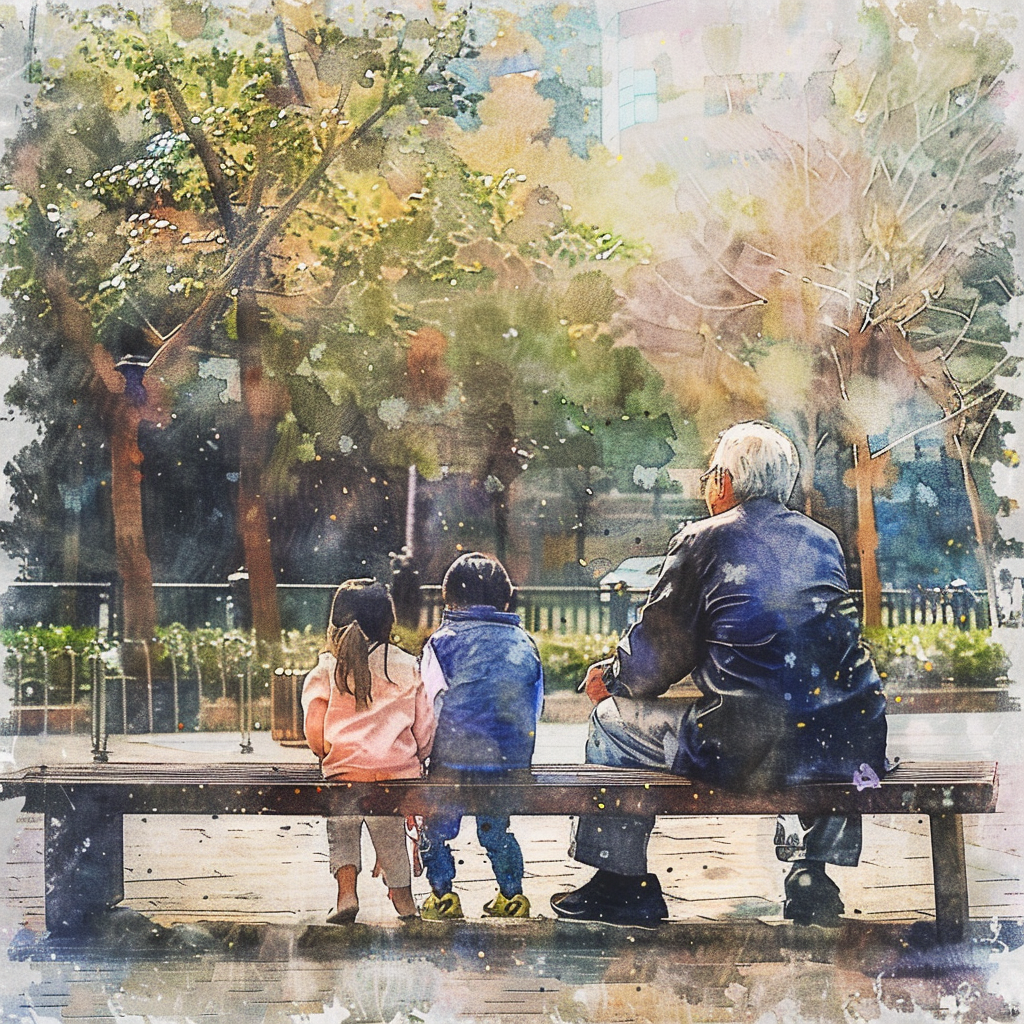
"No young person honours an elder due to his age, except that Allah appoints for him one who will honour him at that age."[4]
Islam places a high emphasis on developing good character and cultivating morals that prioritize kindness, trust, and communal care. Muslims are obligated to believe in the inherent goodness of people, fulfill filial obligations, and look after the elderly, especially in caring for one’s parents. The Quran illustrates the rights of parents extensively in several chapters,[5] using the Prophets (A.S.) as examples of obedient children,[6],[7] commanding Muslims to pay special attention to one’s parents[8] and praying for them,[9] outlining the rights of one’s mother,[10] father and grandfather,[11] and condemning rebellion against one’s parents.[12]
Historically, Islamic values and laws have been ingrained in cultural practices, it is only recently that those values have begun to erode. As an example, in nineteenth-century Central Asia, mahallahs, or ‘dense agricultural settlements, interwoven with basic urban functions’,[13] were spaces rooted in devotion to Islam and the acknowledgement of the demands of Islamic law.[14] Every mahallah had its own mosque, cemetery and other communal buildings, which created opportunities for participating in collective joy and grief alike. Children were raised in these communities on the grounding principle of trust; any elder in the mahallah could provide compassionate care and play a role in their upbringing, giving life to the proverb, ‘it takes a village to raise a child’. Extended families lived closer together in houses linked by small doors,[15] which allowed for healthy intergenerational relationships and created opportunities for younger family members to learn, adapt and emulate Islamic values of caregiving.[16] These mahallahs are not unique to Central Asia; the principles of “hyperlocality” and reciprocal community care were replicated in many Muslim communities around the world, and caregiving ideals were passed on through many generations despite changes in living structures.
Although extended family structures are slowly disappearing, living in a joint family system is much more beneficial than living in a nuclear one. In a joint family setting, similar to the communal care in mahallahs, children grow up in the care of not only their parents but also their grandparents and other elder relatives. The interactions between diverse age groups create a mutual understanding of sharing, trusting, respecting and caring for one another. Moreover, resources and labour are pooled together, allowing for an overall increase in disposable income and a decrease in consumption costs,[17] which not only provides financial security but an increase in barakah as Allah commands Muslims to spend wealth on the most deserving ones, which include one’s parents and close relatives.[18] Siblings raised in joint family systems are also more likely to extend empathy towards one another and collectively provide emotional, physical and financial care for their ageing parents instead of placing the responsibilities on one person.[19]
The joint family structure is mostly found in South Asian Muslim households and it is unlikely to see the practice continue in the West. First-generation Muslim immigrants are more likely to care for their parents and elders, sometimes even replicating a joint family structure in the West. However, that practice is fading as newer, so-called ‘millennial’ generations of younger Muslims fall prey to Western ideals of caregiving, which usually entails the outsourcing of care by a healthcare professional in elderly care homes. With the rise of newer parenting styles, isolated living arrangements, and an overall lack of inherent trust in one another, Muslims are facing a care crisis.
The Caregiving Crisis
The current crisis of care in the Muslim diaspora is mostly due to the shifting social and cultural values in the West and the intersecting nature of opposing family structures, parenting goals, and lifestyle affordability. Moreover, the beginning of the twenty-first century saw a rise in consumer culture and huge leaps in technological advancements, furthering a capitalist agenda that fosters materialistic desires rather than meaningful human connections. This gradually shifted social values away from collective care towards a problematic rise of hyperindividualism, where one’s socioeconomic status evidently became a deciding factor in family structures. Muslims in the West now opt for a nuclear family structure as it is considered optimal financially, socially, and culturally. This heavily impacts the transmission of Islamic care values, which were historically integrated into intergenerational family structures, leading to a more seamless adoption and preservation of filial piety.
The moral basis of filial piety in Islam is grounded in an obligation to be grateful towards parents[20] and elders for the care they provided for them when they were younger.[21] Parents play a permanent and central role in their children’s lives, both emotionally and biologically, and as parents age and children become adults, the caregiving roles reverse.[22] With an increase in the ageing Muslim population in the West and individualistic lifestyles, working adult children might rely more on professional elderly care homes. The use of elderly care homes has been classified as unfilial. However, in some cases, many children have no choice but to rely on these Western care structures.[23] The lack of intercommunal relationships with neighbours, friends, and extended family is a serious weak link in the current social practices of Muslim diasporas in the West. Zhang predicts that this notion of ‘sending parents to care homes is unfilial’, although not substantially influential yet, is becoming an integrated practice in contemporary understandings of filial piety.[24]
Caregiver burnout is the most common reason why adult children opt to send their parents to professional elderly care homes. Historically a feminized form of care, adult daughters tend to take on the role of ‘caregiver’ out of an empathetic response.[25] However, this empathy also exposes them to suffering through residual compassion stress, and in addition to other life demands, leads to compassion fatigue[26] and, consequently, caregiver burnout. Putting preventative measures in place can include sharing caregiving responsibilities across the family instead of giving them to one person, which fosters healthy intergenerational relationships. When the act of caring for one’s parents is modelled by individuals, their own children will internalize these values as well. In turn, this increases the likelihood that they will, when the time comes, also provide meaningful care for their ageing parents.[27]
As Muslims age in the West, community building and relationship preservation are vital. Without social capital or meaningful human connections, Muslim elders will be stuck in a harmful bubble of isolation which will impact their psychological, social, emotional, spiritual and physical well-being.[28] Elders living in isolation are more likely to be vulnerable to physical, social and emotional neglect, which is psychiatrically classified as a form of abuse.[29] According to a study conducted in India,[30] a positive correlation was found between elder abuse and depression, further signifying the importance of communal care for elders. Fortunately, family structures can be varied for the better as well; declining mortality[31] means that children have more grandparents alive, more older people have the company of their siblings and friends, and fewer older people are widowed.
Relationships do not exist in vacuums, and each one contains multitudes; ageing spouses could cultivate intimacy or bear animosity towards each other, parents might be framed as loved ones or burdens, older siblings may be best friends or distant relatives–our individual well-being is inherently linked to our families and the people we love and dependent on the level of effort we put into our care for one another. Upholding the ties of kinship is an Islamic duty[32], and Allah has repeatedly warned Muslims about the consequences of breaking ties with kin.[33] It is then obligatory for Muslims in the West to revitalize core Islamic principles that value trust and emphasize traditional methods of caregiving and adapt them to fit our contemporary lifestyles.
Where Are We Going?
The Muslim Diaspora is at a crossroads; the ornaments of this world are enticing, the illusion of hyperindividuality is portrayed as a strength, and materialistic desires are eroding faith, but the true wealthy inheritance is rooted in the renaissance of Islamic values of care, trust and love. There are tangible ways to actively build healthy intercommunal and intergenerational relationships, to which family structures and masjids are integral. As the central point to the individual, family structures inform one’s foundational identity. As grounding spiritual institutions, masjids play a crucial role in fostering space for building and upholding communities of care. Fighting the rising tide of hyperindividualism and destroying isolation as a symbol of strength is essential to rebuilding communal care, love and trust for one another. This era is a crucial turning point in following the fading footsteps of our ancestors, so where are we going – fa ayna tadh-haboon?
فَأَيْنَ تَذْهَبُونَ
Notes
- Caldera, Celena. 2023. “A Closer Look at Sandwich Generation Caregivers of Medicare Beneficiaries.” AARP Public Policy Institute, (December), 1-19. https://doi.org/10.26419/ppi.00215.001. ↑
- Caldera, Celena. (10) ↑
- Jami` at-Tirmidhi 2022 ↑
- Tahir-ul-Qadri, Shaykh-ul-Islam Dr. Muhammad. 2019. Qur'ānic Encyclopedia. Vol. 3. Parent’s Rights (Huquq al Walidayn) 735-750. Manchester, United Kingdom: Minhaj-ul-Quran Publications. ↑
- Quran 12:99 ↑
- Quran 19:27-32 ↑
- Quran 46:15 ↑
- Quran 17:24 ↑
- Quran 31:14 ↑
- Quran 4:11 ↑
- Quran 19:32 ↑
- Geiss, Paul Georg. “Mahallah and Kinship Relations. A Study on Residential Communal Commitment Structures in Central Asia of the 19th Century.” Central Asian Survey 20, no. 1 (2001): 97–106. https://doi.org/10.1080/02634930120055488. ↑
- Geiss, Paul Georg. (98) ↑
- Geiss, Paul Georg. (102) ↑
- Geiss, Paul Georg. (101) ↑
- Saqib Lodhi, Fahad, Adeel Ahmed Khan, Owais Raza, Tabrez Uz Zaman, Umer Farooq, and Kourosh Holakouie-Naieni. “Level of Satisfaction and Its Predictors among Joint and Nuclear Family Systems in District Abbottabad, Pakistan.” Medical Journal of the Islamic Republic of Iran 33 (2019): 59. https://doi.org/10.47176/mjiri.33.59. ↑
- Quran 2:215 ↑
- Saqib Lodhi, Fahad, Adeel Ahmed Khan, Owais Raza, Tabrez Uz Zaman, Umer Farooq, and Kourosh Holakouie-Naieni. 59 ↑
- Quran 31:14 ↑
- Quran 17:24 ↑
- Daniel Callahan, "What Do Children Owe Elderly Parents?" Hastings Center Report 15, no. 2 (1985): 32-37. ↑
- Zhang, Haomiao. “Sending Parents to Nursing Homes Is Unfilial? An Exploratory Study on Institutional Elder Care in China.” International Social Work 62, no. 1 (2019): 351–62. https://doi.org/10.1177/0020872817725137. ↑
- Zhang, Haomiao. 352 ↑
- Brakman, Sarah-Vaughan. “Adult Daughter Caregivers.” The Hastings Center Report 24, no. 5 (1994): 26–28. https://doi.org/10.2307/3563495. ↑
- Day, Jennifer R., Ruth A. Anderson, and Linda L. Davis. “Compassion Fatigue in Adult Daughter Caregivers of a Parent with Dementia.” Issues in Mental Health Nursing 35, no. 10 (2014): 796–804. https://doi.org/10.3109/01612840.2014.917133. ↑
- Daniel Callahan. 35 ↑
- Ahaddour, Chaïma, Stef Van den Branden, and Bert Broeckaert. “‘What Goes Around Comes Around’: Attitudes and Practices Regarding Ageing and Care for the Elderly Among Moroccan Muslim Women Living in Antwerp (Belgium).” Journal of Religion and Health 59, no. 2 (2020): 986–1012. https://doi.org/10.1007/s10943-018-0562-x. ↑
- Mazzotti, Maria Carla, Paolo Fais, Alberto Amadasi, Guido Pelletti, Elena Giovannini, Arianna Giorgetti, and Susi Pelotti. “When the Hidden Issue of Elder Abuse Leads to Death: Do Not Neglect Elder Neglect.” The American Journal of Forensic Medicine and Pathology 43, no. 1 (2022): 60–65. https://doi.org/10.1097/PAF.0000000000000700. ↑
- Bordoloi, Ananya, Arif Ali, and Sabana Islam. “Elder Abuse and Its Association with Depression and Social Support: A Community-Based Study from Tezpur, Assam.” Journal of Geriatric Mental Health 5, no. 2 (2018): 128–33. https://doi.org/10.4103/jgmh.jgmh_13_18. ↑
- Uhlenberg, Peter. “Mortality Decline in the Twentieth Century and Supply of Kin Over the Life Course.” The Gerontologist 36, no. 5 (October 1, 1996): 681–85. doi:10.1093/geront/36.5.681. ↑
- Tahir-ul-Qadri, Shaykh-ul-Islam Dr. Muhammad. 2019. Qur'ānic Encyclopedia. Vol. 3. The Rights of Relatives (Huquq al Aqarib) 764-777. Manchester, United Kingdom: Minhaj-ul-Quran Publications. ↑
- Quran 2:27 ↑
- Quran 81:26; Translation: “So where are you going?” - This ayah can be understood as a rhetorical question, in other words, you are lost and misguided, so which path will you choose to follow? ↑
Tags