Healing Beyond the Physical: The Importance of Spiritual Guidance
Modern medicine treats the body. A complete medicine treats the soul. On the necessity of a spiritual guide for holistic wellbeing.
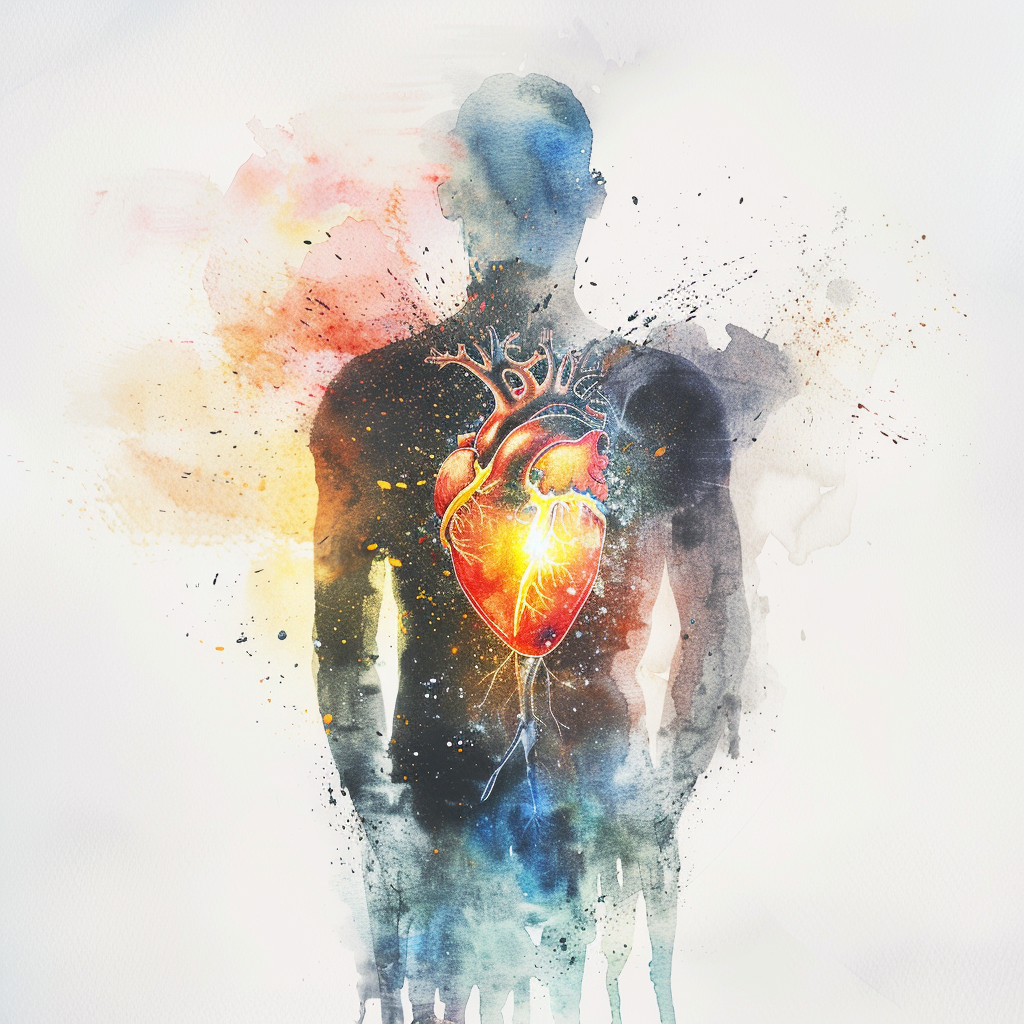
While modern medicine’s approach has numerous strengths, it has significant limitations, especially when it comes to addressing holistic spiritual well-being. Spirituality is inherently intertwined with physical health, and to achieve overall well-being, it is essential to have a spiritual guide.
The Approach of Modern Medicine
Medicine today offers unparalleled benefits: increased life expectancy, breakthrough treatments and surgeries, and new discoveries made on a daily basis. However, these advancements have been so deeply focused on the physical pathways for diagnosis, treatment, and cure that they have come at a cost: the soul of medicine has been lost in the process. What these advancements in modern medicine have failed to recognize is that humans are complex beings and that addressing the physical realm is only part of the picture if holistic or whole-person healing is to be achieved.
The concept that humans are beyond merely their physical bodies is established in the Qur’an, in Surah al-Hijr, when Almighty Allah explains to the angels the physical component of the human as well the constituent of Ruh, or spirit:
وَإِذْ قَالَ رَبُّكَ لِلْمَلَـٰٓئِكَةِ إِنِّى خَـٰلِقٌۢ بَشَرًۭا مِّن صَلْصَـٰلٍۢ مِّنْ حَمَإٍۢ مَّسْنُونٍۢ ٢٨
فَإِذَا سَوَّيْتُهُۥ وَنَفَخْتُ فِيهِ مِن رُّوحِى فَقَعُوا۟ لَهُۥ سَـٰجِدِينَ ٢٩
(15:28-29)
“And (remember) when your Lord said to the angels: ‘Indeed I am going to create a human from sounding dried clay, moulded from ageing, dark mud. So when I have proportioned him and breathed My Spirit into him, then fall down in prostration before him.’”[1]
Shaykh-ul-Islam Dr. Muhammad Tahir-ul-Qadri has further explained: “The human is a compound of two things – the body and the spirit. The body was created with different constituents of clay and water, and the body and its attributes are from the earthly world. Ruh (spirit) is from heaven, and its attributes are from heaven.”[2] Thus, a human is composed of both the spirit (Ruh) and the physical body.
The separation between spirit and the body in the approach of the modern medical system can be traced back to the French philosopher, René Descartes (1596-1650) and his theory of mind-body dualism.[3] Descartes argued that the natures of mind and body are completely different from one another and that each could exist by itself.[4] Descartes’ approach initially allowed for the advancement of medicine as a scientific field, allowing medical professionals to escape from the limitations and approval of the church and to provide a truly scientific basis for the practice of medicine.[5] However, in the modern era, this approach has prevented a challenge in delivering holistic care and has resulted in an environment where the spiritual needs of the patients are largely ignored in the clinical setting.[6]
Although Descartes’ dualistic approach has remained the dominant philosophy of the medical system,[7] interest in more holistic medicine – medicine which addresses both the spiritual and physical components of humans – has considerably grown in recent decades. For example, between 1999 and 2013 alone, approximately 30,000 articles related to “spirituality and health” were published in the PubMed database.[8] Medical research has shown that in patients, spirituality is related to less hospitalization, improved coping with illness, decreased substance use and suicide attempts, better treatment adherence, less depression, and lower mortality.[9]
“Spirituality” is defined as the aspect of humanity that refers to the way individuals seek and express meaning and purpose, and the way they experience their connectedness to the significant or sacred.[10] Religion, in particular, is the way many people, including Muslims, experience spirituality. However, although spirituality is being increasingly taught in medical schools and being researched in literature, it is not yet translating to care in clinical settings.[11] Despite the fact that a majority of doctors believe in the importance of spiritual care, a low frequency of doctors raise this topic.[12] What causes hesitation for physicians to discuss spirituality with their patients?
In a recent review, the most commonly cited barriers to discussing spirituality and religion were lack of knowledge, lack of time, and personal discomfort of the physician.[13] Other factors include lack of training and lack of clear, defined concepts.[14] In short, the modern medical system has trained physicians very well to address illnesses of the physical mind and body, but has not yet taught physicians how to address spiritual health. A new approach to healing in modern medicine has more recently been described: integrative medicine. Integrative medicine is the treatment of patients through spiritual, emotional, mental, environmental, and physical means,[15] and thus considers religious and philosophical views in its healing process. The general principle is that all aspects of the patient are considered in treating illness, and the treatment includes natural and less invasive alternatives when possible.[16]
Nevertheless, although the landscape of modern medicine is slowly progressing towards a more holistic and individualized approach to healing, a dilemma still arises: how can a Muslim living in modern times address both the physical and spiritual dimensions of health? How can one maintain both physical health and spiritual soundness? The answer is simple: as with any field of knowledge in the world, a guide and expert is required.
The Value of a Spiritual Guide
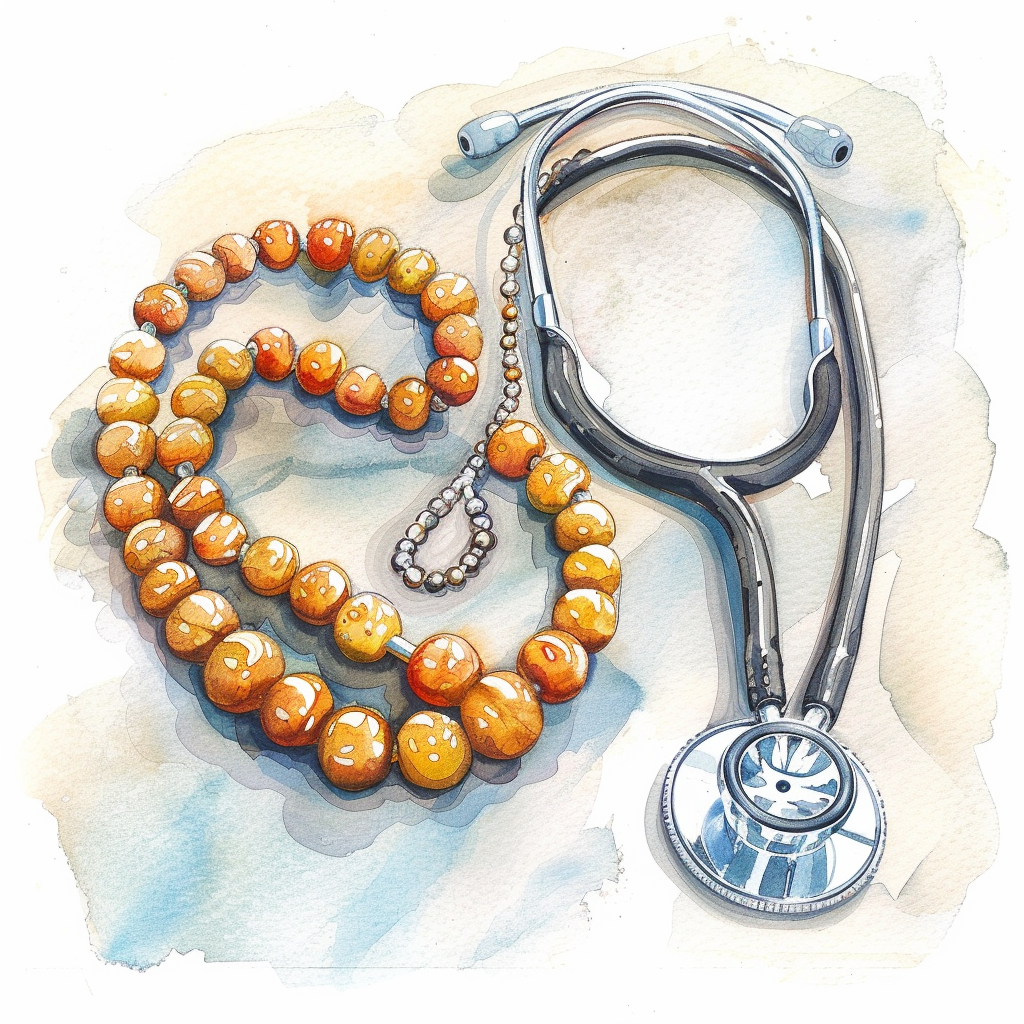
Many of the best experts and leaders of physical health are physicians. In order to attain adequate physical health, one must develop a relationship and connection with their doctor. The doctor-patient relationship is one of the core principles in the ethics of medicine, and the foundation of the relationship involves four key elements: knowledge, trust, loyalty, and regard.[17] In essence, the physician we choose to follow is one that we wholly trust with our health and one whose experience and knowledge we highly regard.
However, a physician’s realm of knowledge does not extend beyond the physical body and mind. Therefore, in order to improve our spiritual health, we must also establish a relationship with a healer of the spirit. In the past, these healers have included the Prophets (AS) and their companions. Although prophethood ended with the Beloved Prophet Muhammad (PBUH), there are still shuyukh or spiritual leaders in every generation that are connected with the Beloved Prophet (PBUH) through chains, or sanad. Sanad does not refer to the knowledge itself, but refers to the names and personalities who are the bearers of true knowledge of the Beloved Prophet (PBUH) and have transmitted this knowledge to others. These spiritual guides are connected to the oral and spiritual chain that began with the Beloved Prophet (PBUH), then continued on with his companions, and their followers, and so on, to this very day.[18]
During a series of lectures discussing the Sahih al-Bukhari, Shaykh-ul-Islam Dr. Muhammad Tahir-ul-Qadri has articulately explained sanad with regards to ahadith (the personalities and authorities through which hadith were transferred): According to Imam Muhammad bin Sirin, Imam Muslim, and many other imams, knowing and memorizing the names of the personalities on the list of sanad is Din (religion).[19] Furthermore, these imams have emphasized the importance of knowing who the personalities are that have transmitted the ahadith of the Holy Prophet – if we did not trust them, then how can these texts be reliable?[20]
A shaykh or a spiritual guide is not just someone who has Islamic knowledge and information, but he is a leader who lives the path of spiritual excellence.[21] He is fueled by and driven by the love of Almighty Allah, the Beloved Messenger (PBUH), and the path of religion. He has sacrificed his entire life for the pleasure of Almighty Allah and the Beloved Messenger (PBUH). The role of a spiritual guide is not just to heal the minds of his companions – his role is to transform those who share his company. With Almighty Allah’s will and the blessings of the Beloved Prophet (PBUH), a spiritual guide can help a human being move from the state of Islam to the state of Iman, and ultimately to the state of Ihsan.[22]
This guide follows in the path of the Prophet PBUH and provides others with an opportunity to sit with him, eat with him, pray with him, travel with him, and perform dhikr with him; thus, healing and transformation of one’s spirit or purification of one’s heart will occur simply by being in the company of this individual.[23] This concept, called sohba (companionship), is also the way of the Beloved Prophet (PBUH) – the transformation of people took place because of their association with the Beloved Prophet (PBUH) and through his sohba.[24] Thus, if the holistic healing of humans requires addressing all the aspects of well-being – physical, mental, spiritual – then we must also seek a connection with a spiritual guide and leader in the same way that we seek to establish relationships with medical professionals for our physical health.
May Almighty Allah grant us guidance and allow us to be in the company of those whom He loves. May Almighty Allah allow us to learn from these individuals, so we may also live our lives in the path of spiritual excellence and attain the pleasure of Almighty Allah, for this is the highest achievement as stated in the Qur’an:
وَرِضْوَٰنٌۭ مِّنَ ٱللَّهِ أَكْبَرُ ۚ ذَٰلِكَ هُوَ ٱلْفَوْزُ ٱلْعَظِيمُ ٧٢
“And the greatest of all is Allah’s good pleasure. That is the supreme success.”
Notes
- “Itikaf City 2017, Day 2.” Lecture by Dr. Muhammad Tahir-ul-Qadri. ↑
- Thibaut F. The mind-body Cartesian dualism and psychiatry. Dialogues Clin Neurosci. 2018 Mar;20(1):3. doi: 10.31887/DCNS.2018.20.1/fthibaut ↑
- Correll, Jordyn (2022) "Descartes’ Dualism and Its Influence on Our Medical System.," SUURJ: Seattle University Undergraduate Research Journal: Vol. 6, Article 11. ↑
- Correll, Jordyn "Descartes’ Dualism and Its Influence on Our Medical System.," ↑
- Ibid ; Best M, Butow P, Olver I. Why do We Find It so Hard to Discuss Spirituality? A Qualitative Exploration of Attitudinal Barriers. J Clin Med. 2016 Sep 1;5(9):77. doi: 10.3390/jcm5090077 ↑
- Correll, Jordyn "Descartes’ Dualism and Its Influence on Our Medical System.," ↑
- Lucchetti G., Lucchetti A. L. G. (2014). Spirituality, religion, and health: Over the last 15 years of field research (1999-2013). Int. J. Psychiatry Med. 48, 199–215. doi: 10.2190/PM.48.3.e ; de Brito Sena MA, Damiano RF, Lucchetti G, Peres MFP. Defining Spirituality in Healthcare: A Systematic Review and Conceptual Framework. Front Psychol. 2021 Nov 18;12:756080. doi: 10.3389/fpsyg.2021.756080 ↑
- Correll, Jordyn "Descartes’ Dualism and Its Influence on Our Medical System.," ; de Brito Sena MA, Damiano RF, Lucchetti G, Peres MFP. Defining Spirituality in Healthcare: A Systematic Review and Conceptual Framework. Front Psychol. 2021 Nov 18;12:756080. doi: 10.3389/fpsyg.2021.756080 ; Moreira-Almeida A., Lotufo-Neto F., Koenig H. G., Lotufo Neto F., Koenig H. G. (2006). Religiousness and mental health: a review. Rev. Bras. Psiquiatr. 28, 242–250. doi: 10.1590/S1516-44462006005000006 ; Menegatti-Chequini M. C., Maraldi E. D. O., Peres M. F. P., Leão F. C., Vallada H. (2019). How psychiatrists think about religious and spiritual beliefs in clinical practice: findings from a university hospital in São Paulo, Brazil. Rev. Bras. Psiquiatr. 41, 58–65. doi: 10.1590/1516-4446-2017-2447 ↑
- Best M., Butow P., Olver I. (2015). Do patients want doctors to talk about spirituality? A systematic literature review. Patient Educ. Couns. 98, 1320–1328. doi: 10.1016/j.pec.2015.04.017 ; Clark PA, Drain M, Malone MP. Addressing patients' emotional and spiritual needs. Jt Comm J Qual Saf. 2003 Dec;29(12):659-70. doi: 10.1016/s1549-3741(03)29078-x ↑
- Correll, Jordyn "Descartes’ Dualism and Its Influence on Our Medical System.," ↑
- Ibid. ↑
- Best, M.; Butow, P.; Olver, I. Doctors discussing spirituality: A systematic literature review. Palliat. Med. 2016, 30, 327–337. ↑
- de Brito Sena MA, Damiano RF, Lucchetti G, Peres MFP. Defining Spirituality in Healthcare: A Systematic Review and Conceptual Framework. ; Menegatti-Chequini M. C., et. al. (2019). How psychiatrists think about religious and spiritual beliefs in clinical practice: findings from a university hospital in São Paulo, Brazil. ; Best M., et. al. (2015). Do patients want doctors to talk about spirituality? A systematic literature review. ↑
- Gannotta R, Malik S, Chan AY, Urgun K, Hsu F, Vadera S. Integrative Medicine as a Vital Component of Patient Care. Cureus. 2018 Aug 4;10(8):e3098. doi: 10.7759/cureus.3098. ↑
- Gannotta R, et. al.. Integrative Medicine as a Vital Component of Patient Care. ↑
- Chipidza FE, Wallwork RS, Stern TA. Impact of the Doctor-Patient Relationship. Prim Care Companion CNS Disord. 2015 Oct 22;17(5):10.4088/PCC.15f01840. doi: 10.4088/PCC.15f01840. ↑
- Alexander, Ihsan. “What is a Shaykh?” Youtube, uploaded by Ihsan Alexander, October 4, 2022. Shaykh ul Islam Dr. Muhammad Tahir-ul-Qadri. Daura Sahih al-Bukhari- Birmingham (UK). Sitting 1. 7-28-2006. ↑
- Alexander, Ihsan. “What is a Shaykh?” ↑
- Ibid. ↑
- Ibid. ↑
- Ibid. ↑
- Ibid. ↑
- Ibid. ↑
- Shaykh-ul-Islam, Dr.Muhammad Tahir-ul-Qadri. Manifest Quran. Minhaj-ul-Quran Publications, 2024. 9:72. ↑
Tags