


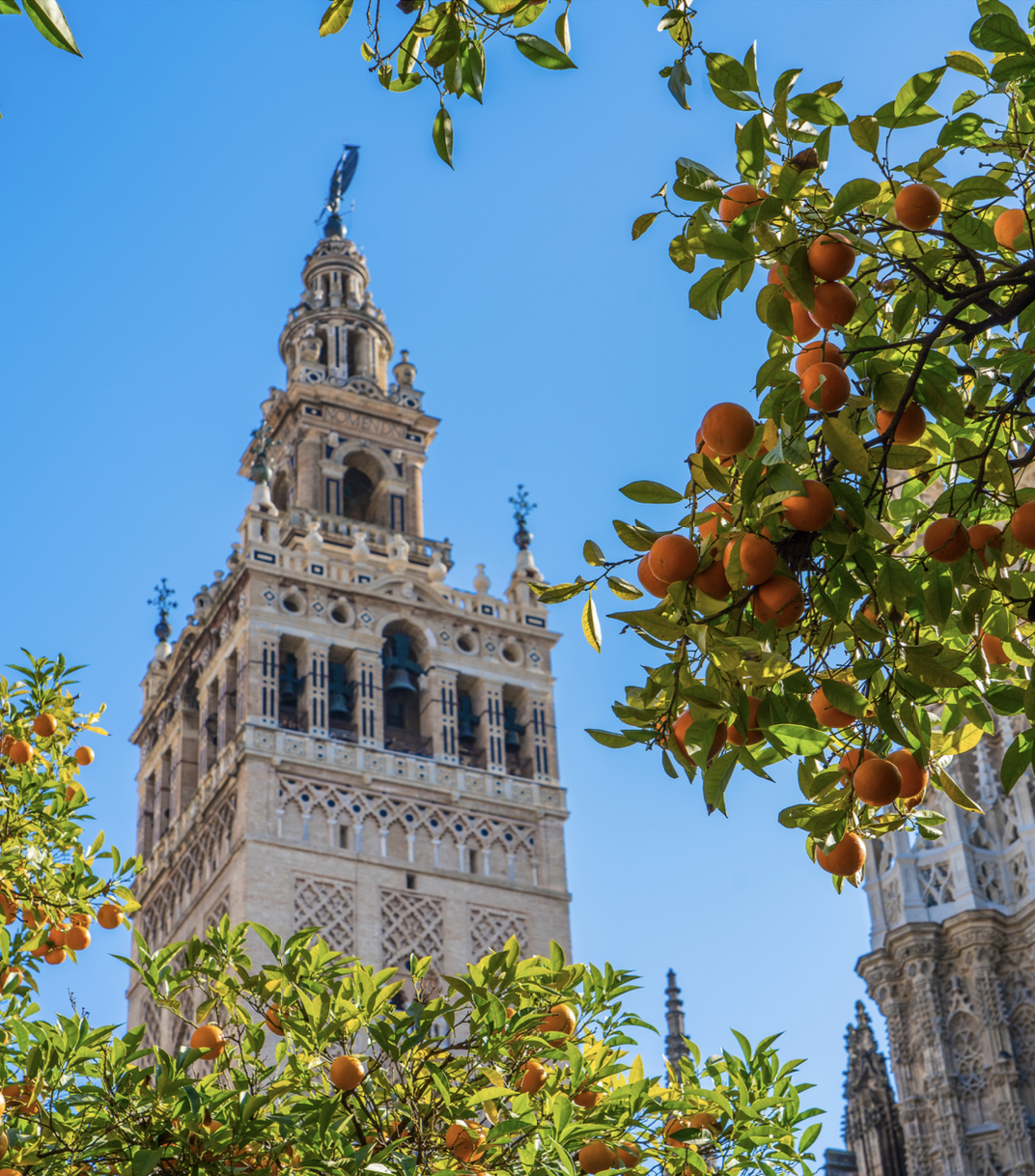
The 11th century marked a golden age in Muslim Spain, Al-Andalus, where cultural, scientific, and intellectual pursuits thrived under Muslim rule. Among the towering figures of this era was Ibn ʿArabi (Muhyi l-Din Muhammad al ‘Arabi al-Ta’i al-Hatimi) (1165- 1240), an Andalusian scholar, philosopher, and mystic. Referred to as “The Greatest Master” or “The Greatest of Spiritual Guides” (al-Shaykh al-Akbar), Ibn ʿArabi stands as one of the most prominent and influential figures in the Islamic intellectual and mystical tradition. Ibn ʿArabi’s contributions profoundly influenced Islamic thought and shaped the trajectory of mysticism within Islam. A prolific writer and a spiritual thinker, he has been described as a “unique genius in the world of mystical teaching”[1]. Ibn ʿArabi’s works continue to inspire seekers and scholars worldwide and have left an indelible mark on Sufism, Islamic theology, and philosophy. A comprehensive overview of his extraordinary life, thoughts, and works is an enormous task. This article seeks to explore some of Shaykh ibn Arabi’s life and achievements, his intellectual context, and the significance of his works within the Andalusian era and beyond, as well as his enduring legacy.
Al-Andalus: A Cultural and Intellectual Crossroads
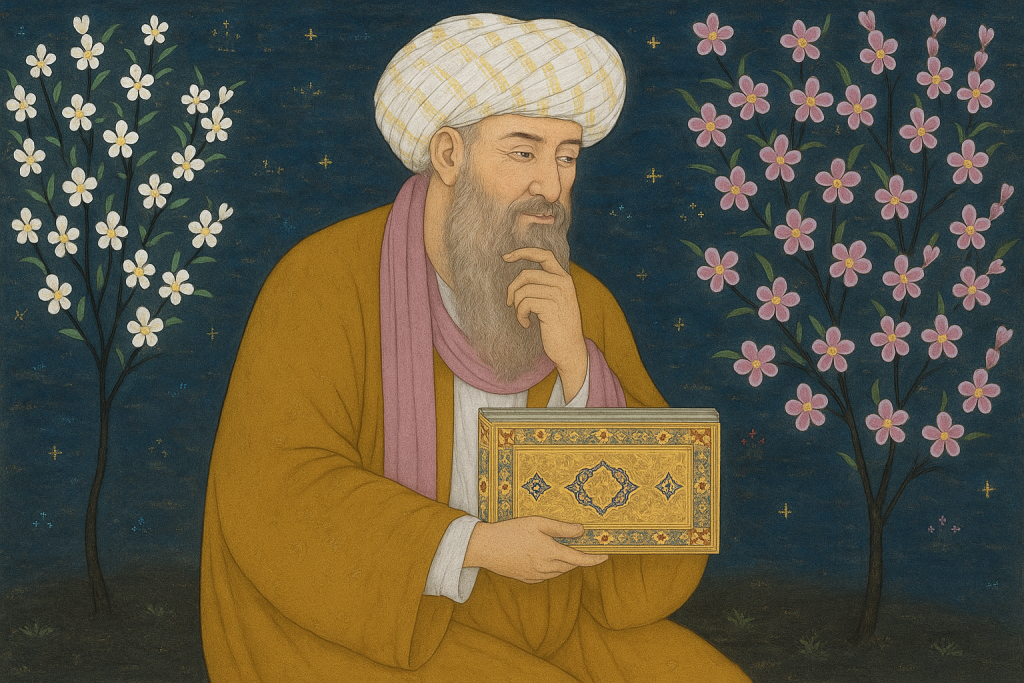
By the 11th century, Al-Andalus had become a significant powerhouse for trade and knowledge. Muslim Spain had developed into an epicentre for intellectual achievement, with experts from many different fields and faiths participating in lively intellectual exchanges. Andalusia, a place where Islam, Christianity, and Judaism coexisted and interacted, saw significant intellectual and cultural advancement throughout this time. Cities like Córdoba, Seville, and Granada attracted scholars from the Islamic world and beyond because of their research facilities, universities, and libraries. Ibn ʿArabi was born and raised in southern Murcia, a city known for its vibrant culture and where the arts, philosophy, and theology flourished.[2] This cosmopolitan environment influenced the intellectual framework of Ibn ʿArabi.
Ibn ʿArabi’s Life and Education
Ibn ʿArabi was thus born during a period of remarkable intellectual and cultural flourishing in Andalusia. His family belonged to the noble lineage of Qureishi, providing him with access to both religious and secular education. Early on, Ibn ʿArabi displayed an extraordinary aptitude for learning, delving into Islamic jurisprudence, theology, philosophy, and poetry. Not only did Ibn ‘Arabi have a firm grasp of classical Islamic sciences, but he also climbed the highest peaks of mysticism. Andalusia was a centre for Sufi masters and mystical thought, and Ibn ʿArabi’s formative years were shaped by interactions with local Sufi masters and teachers. In his youth, he experienced a profound spiritual awakening while battling an illness. This experience led him to devote himself entirely to the path of divine knowledge. According to another version, prior to immersing himself in the study of classical Islamic sciences, he was engaged in a variety of pastimes and activities while residing in the military barracks, notably none of which were detrimental or counterproductive. However, it was also during this time that he had a dream that changed his life, in which the Prophet Muhammad ﷺ instructed him to devote himself to the study of sacred knowledge. This was the pivotal moment that set him on the path of academic study and spiritual enlightenment.
Travels and Quest for Knowledge
Ibn ʿArabi’s life was marked by extensive travels across the Islamic world, a journey that mirrored his quest for spiritual and intellectual enlightenment. He moved from Andalusia to North Africa and then to the Middle East, visiting Mecca, Medina, Baghdad, Jerusalem, Damascus, and Cairo. Along the way, he met numerous scholars, saints, and spiritual teachers, further broadening his horizons and deepening his understanding of the Divine. His pilgrimage to Mecca was a particularly transformative experience. It was there that he composed some of his most profound works, including The Meccan Revelations (al-Futuhat al-Makkiyya), a monumental encyclopedic work encompassing theology, mysticism, cosmology, and metaphysics. Mecca, with its sacred atmosphere, became the symbolic and literal centre of his spiritual worldview.
Philosophical and Mystical Teachings
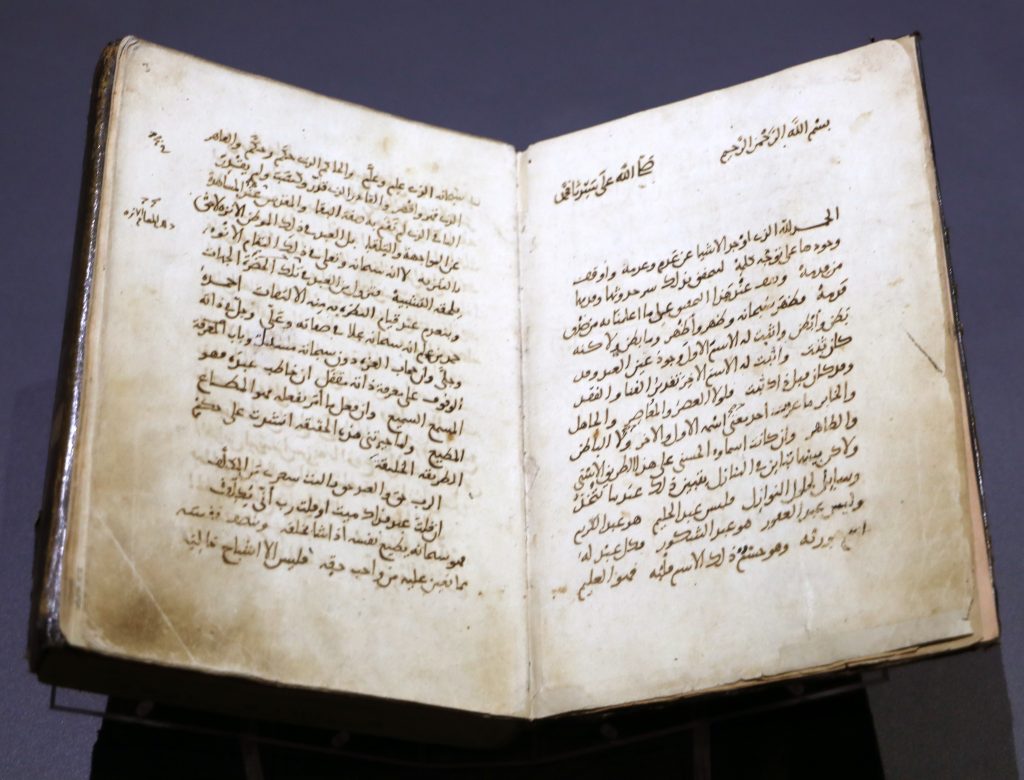
“A genuinely new thought is rare – exceedingly rare- and its emergence is the hallmark of a genius. It takes a rare and singular person to bring out a thought or vision that has never previously arisen, to open up the possibilities of a transformation of human understanding, moving it into un-dreamt- of dimensions”.[3] This description of Ibn ʿArabi by Stephen Hertenstein, is one of several written by academics and scholars who have attempted to describe the phenomenon of al-Shaykh al-Akbar.
Ibn ʿArabi’s teachings are vast and multifaceted, often described as complex and challenging to decipher. In his writings, al-Shaykh al-Akbar had a remarkable command of complex philosophical ideas, spiritual experiences, and metaphysical conceptions. Many were left in a state of incomprehension at the magnitude of his extraordinary brilliance. For this reason, Ibn ‘Arabi has been criticised by those who misinterpreted and misunderstood his works.
The Perfect Man & Divine Love
The Perfect Man (al-Insan al-Kamil) is one of Ibn ʿArabi’s most influential ideas, a being who reflects the Divine attributes in their fullest form. The Perfect Man serves as a mirror for God’s self-disclosure and a guide for humanity. For Ibn ʿArabi, the Holy Prophet Muhammad ﷺ epitomises this ideal, serving as the universal model for spiritual realisation. This concept had a profound impact on later Islamic thought, influencing subsequent Sufi thinkers and even extending to modern philosophical and psychological discourses on human potential and perfection. This prefigured, by more than five centuries, Nietzsche’s concept of the Superman as a paradigm for human transcendence. Divine Love also occupies a central place in Ibn ʿArabi’s mysticism. He viewed love as the fundamental force of creation and the primary means through which the Divine is known. His prose encapsulates this sentiment:
While the sun’s eye rules my sight,
love sits as sultan in my soul.
His army has made camp in my heart –
passion and yearning, affliction and grief.
When his camp took possession of me
I cried out as the flame of desire
burned in my entrails.
Love stole my sleep, love has bewildered me,
love kills me unjustly, and I am helpless,
love has burdened me with more than I can bear
so that I bequeath Him a soul and no body.
In his celebrated work, The Interpreter of Desires (Tarjuman al-Ashwaq), Ibn ʿArabi uses poetic symbolism to explore the nature of Divine and human love, blending mystical insight with literary brilliance. For Ibn ʿArabi, human love, when understood in its highest sense, serves as a gateway to Divine love. He believed that every form of love ultimately leads back to the Source, as all love is a reflection of God’s love for His creation. He states that the “Creator can only be found through His creation. Everything is a witness to His creation. Without knowing the reality of reality, it is impossible to know God.”[4]
Ibn ʿArabi also emphasised the importance of compassion and generosity, writing “No reward that a human being can receive for his achievements can compare with the felicity awarded to whoever shows compassion to humanity”[5] He believed in the value of all human beings, and interacting with them with the best of intentions. He says, “Treat everyone equally whether they are kings or paupers, old or young. Know that humankind is one body, and individuals are its members. A body is not a whole without its parts. The right of the man of knowledge is respect, the right of the ignorant one is advice, the right of the heedless one is to be awakened, the right of the child is compassion and love.”[6]This perspective highlights his deep concern for ethical conduct and the cultivation of virtue in all human interactions.
Some of his Greatest Literary Contributions
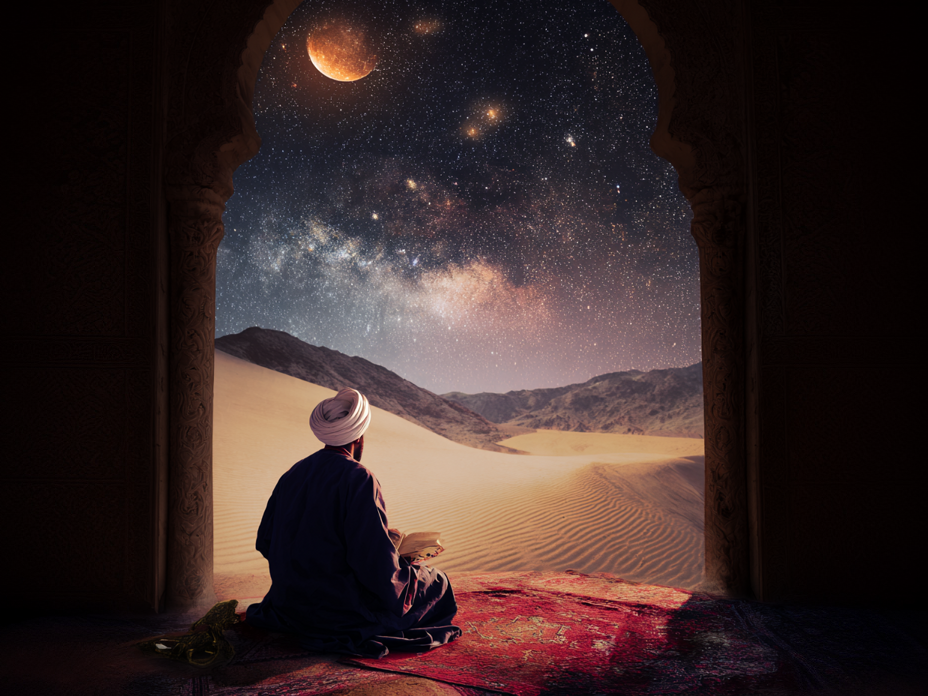
Ibn ʿArabi was an extraordinarily prolific writer, nearly 1000 works have been attributed to him, each of which has been praised as a goldmine of insight and creativity.[7] His writings range from short treatises to comprehensive multi-volume works, addressing topics as diverse as theology, cosmology, metaphysics, and poetry. Among his most famous works is The Meccan Revelations (al-Futuhat al-Makkiyya): A vast and intricate encyclopedia of spiritual knowledge and mystical insights, this work is considered one of the greatest achievements of Islamic thought. Topics include the inner meanings of the Islamic rituals, the stations of travellers on the journey to God, the spiritual and ontological meaning of the letters of the Arabic alphabet, the sciences embraced by each of the ninety-nine names of God, and the significance of the messages of various Prophets.[8] A comprehensive collection of Islamic esoteric studies, it is widely regarded as unparalleled in both breadth and depth, surpassing all previous and subsequent works of its kind.
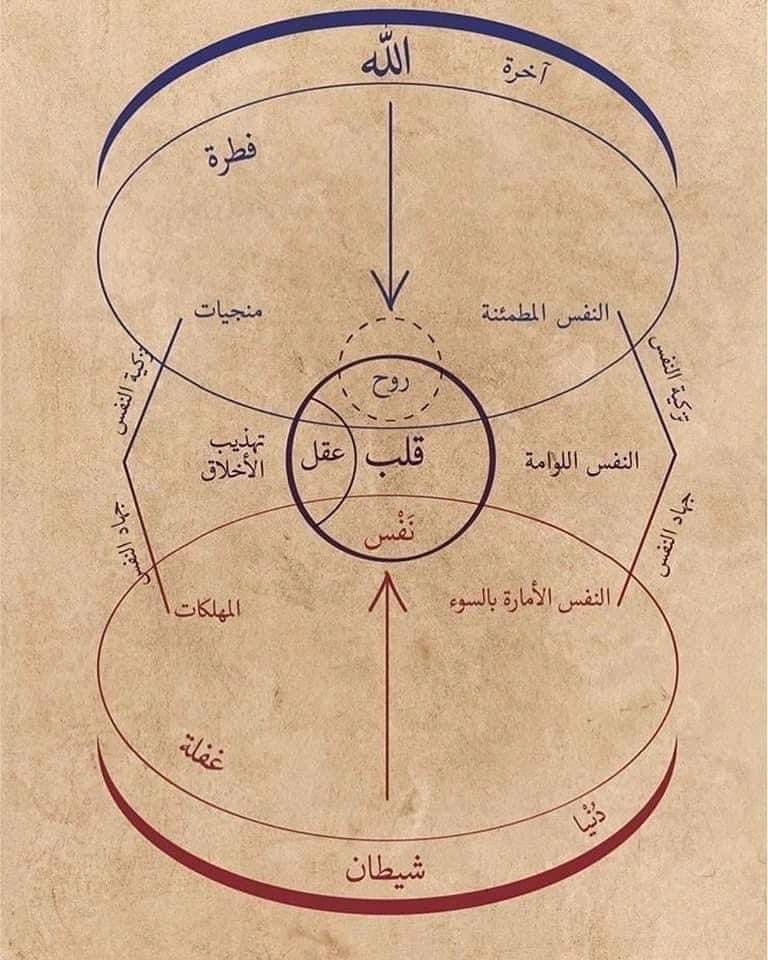
Ibn ʿArabi’s poetry is filled with metaphysical themes, using symbols and language to express his mystical experiences and insights. His Divine Poem (al-Qasidah al-Nuniyyah) and Fusus al-Hikam (The Bezels of Wisdom) are considered masterpieces of both mystical philosophy and poetry. Fusus al-Hikam presents a series of metaphysical reflections on the wisdom of the Prophets. It consists of twenty-seven chapters, each devoted to the spiritual significance and wisdom of a different Prophet, and is regarded as the core of Ibn ʿArabi’s spiritual teaching.[9] Ibn ʿArabi’s disciples revered this work for generations and penned hundreds of commentaries on it. The Interpreter of Desires (Tarjuman al-Ashwaq) is a collection of mystical love poetry, blending earthly and divine themes in a masterful interplay of symbolism.
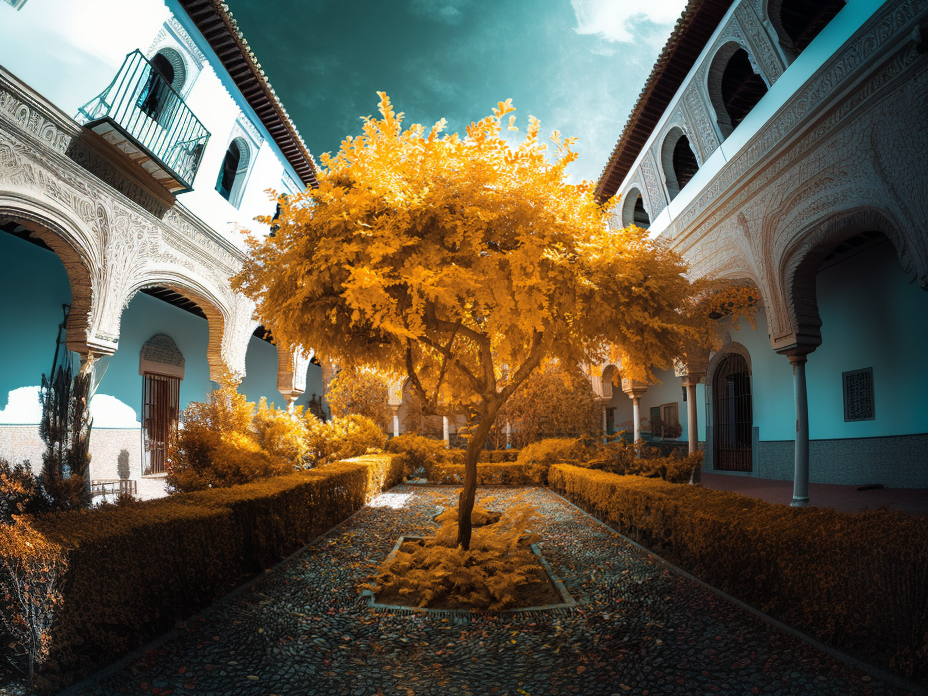
The Tree of Being (Shajarat al-Kawn) is an inspired declaration of his deep love for the Holy Prophet ﷺ, beautifully describing his physical, and spiritual attributes. He writes; “Allah Most High, in His mercy sent His Beloved as a mercy upon the universe. Muhammad ﷺ, was the one whose soul was Allah’s first creation, created from the Light of Allah…he (the Prophet ﷺ) never had a man as a teacher, yet he was the wisest of men, for he had the Lord as his teacher.”[10] Speaking on his manner, he said; “He was the most generous, the most valorous, the gentlest. He cast his eyes down more often than up…he would stay silent for long periods and laugh little, yet he had a sense of humour and liked to see others smile…he was very compassionate and loving especially to women and children.” [11]
As with all great people, Ibn ʿArabi had his share of adversaries. Not everyone understood him. Despite this, all were in awe of his spiritual presence and his enduring intellectual legacy, inspiring countless commentaries and interpretations. Moreover, despite opposition, he was always gentle, merciful, and compassionate, and he approached everyone with love, even his adversaries. He detested violence, even in the punishment of murderers. He wrote, “Although according to religious law the punishment for murder is death, it is better to forgive.”[12] He also wrote. “On the Day of Judgment, I will intercede for those who deny me.”[13] This clearly showed the magnanimity of his character.
Ibn ʿArabi and the Andalusian Legacy
Ibn ʿArabi’s Andalusian roots were evident in his worldview, which embraced diversity and emphasised the universality of spiritual truths. Living in a multicultural society where Muslims, Christians, and Jews coexisted, Ibn ʿArabi developed a perspective that transcended sectarian boundaries. His writings often highlight the shared spiritual heritage of humanity, reflecting the pluralistic ethos of Al-Andalus. For instance, in Fusus al-Hikam, Ibn ʿArabi draws on the stories of Prophets to illustrate universal principles of divine wisdom. His ability to bridge theological and cultural divides made his work influential not only in the Islamic world but also in later Western philosophical and mystical traditions.
Influence and Legacy
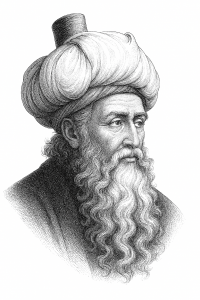
Ibn ʿArabi’s influence extends far beyond his lifetime, shaping the development of Islamic philosophy, Sufism, and metaphysical thought. His ideas have been studied, debated, and adapted by scholars and mystics across the Islamic world, from the Ottoman Empire to South Asia. The Ottoman Empire, in particular, became a centre for the dissemination of his teachings, with numerous Sufi orders adopting his ideas. In modern times, lbn Arabi’s thought continues to inspire scholars and spiritual seekers. His teachings have gained renewed attention, not only within Islamic circles but also among Western scholars and seekers of spiritual wisdom. His emphasis on universal love and the interconnectedness of all existence resonates with many in contemporary discussions on interfaith dialogue and spirituality. His vision of spiritual inclusion and universal love is exemplified in the following famously credited verse, which captures his conviction in the oneness of existence (wahdat al-wujud) and his idea that love transcends all barriers and leads to the ultimate reality of God.
“My heart has become capable of every form;
It is a pasture for gazelles and a convent for Christian monks,
And a temple for idols and the pilgrim’s Kaaba,
And the tables of the Torah and the book of the Qur’an.
I follow the religion of Love:
Whatever way Love’s camels take, That is my religion and my faith.”
In today’s world, his teachings on unity, love, and spiritual transcendence offer valuable insights for fostering understanding and harmony in a pluralistic society.His teachings continue to inspire those seeking a deeper understanding of the divine, transcending cultural and religious boundaries.
A Timeless Message
Ibn ʿArabi remains a towering figure in the history of Islamic thought, embodying the synthesis of intellectual rigor and spiritual depth. His life and works invite us to explore the mysteries of existence, urging us to see beyond the surface of the material world and recognise the unity underlying all creation. For those who seek wisdom, Ibn ʿArabi offers a path that bridges the earthly and the divine, encouraging a journey of self-discovery and love that leads to the ultimate truth. As Shaykh al-Akbar himself wrote, “He who knows himself knows his Lord.”[14] This timeless message continues to resonate, reminding humanity of its divine potential and the boundless beauty of existence. His legacy reminds us of the enduring contributions of the Andalusian era to global civilization. His writings serve as a testament to the power of intellectual and spiritual pursuits in bridging cultural divides and advancing human knowledge. As the world continues to grapple with issues of identity, diversity, and coexistence, the teachings of Ibn ʿArabi remain as relevant as ever.

[1] Stephen Hirtenstein, “The Unlimited Mercifier: The Spiritual Life and Thought of lbn Arabi” Oxford: Anqa Publishing (1999),2
[2] Seyyed Hossein Nasr, “Three Muslim Sages: Avicenna, Suhrawardi, Ibn Arabi” Cambridge: Harvard University Press,1964.
[3] Stephen Hirtenstein, “The Unlimited Mercifier: The Spiritual Life and Thought of lbn Arabi” Oxford: Anqa Publishing (1999),3
[4] Shaykh Tosun Bayrak al-Jerrahi al-Halveti, “Ibn Arabi The Tree of Being Shajarat al-Kawn An Ode to the Perfect Man” Cambridge: Archetype Chetwynd House, (2005),55
[5] ibid,62
[6] Ibid, 64
[7] Stephen Hirtenstein, “The Unlimited Mercifier: The Spiritual Life and Thought of lbn Arabi” Oxford: Anqa Publishing (1999)
[8] Ibn Arabi Society. “Introduction to Ibn Arabi.” https://www.ibnarabisociety.org
[9] R.W.J Austin (Translator). “The Bezels of Wisdom (Fusus al-Hikam)” Paulist Press, 1980
[10] Shaykh Tosun Bayrak al-Jerrahi al-Halveti, “Ibn Arabi The Tree of Being Shajarat al-kawm An Ode to the Perfect Man” Cambridge: Archetype Chetwynd House, (2005), 182
[11] ibid,186
[12] ibid,35
[13] ibid,35
[14] Henry Corbin, “Alone with the Alone – Creative Imagination in the Sufism of Ibn Arabi”, Princeton University Press, (1998), 127

