


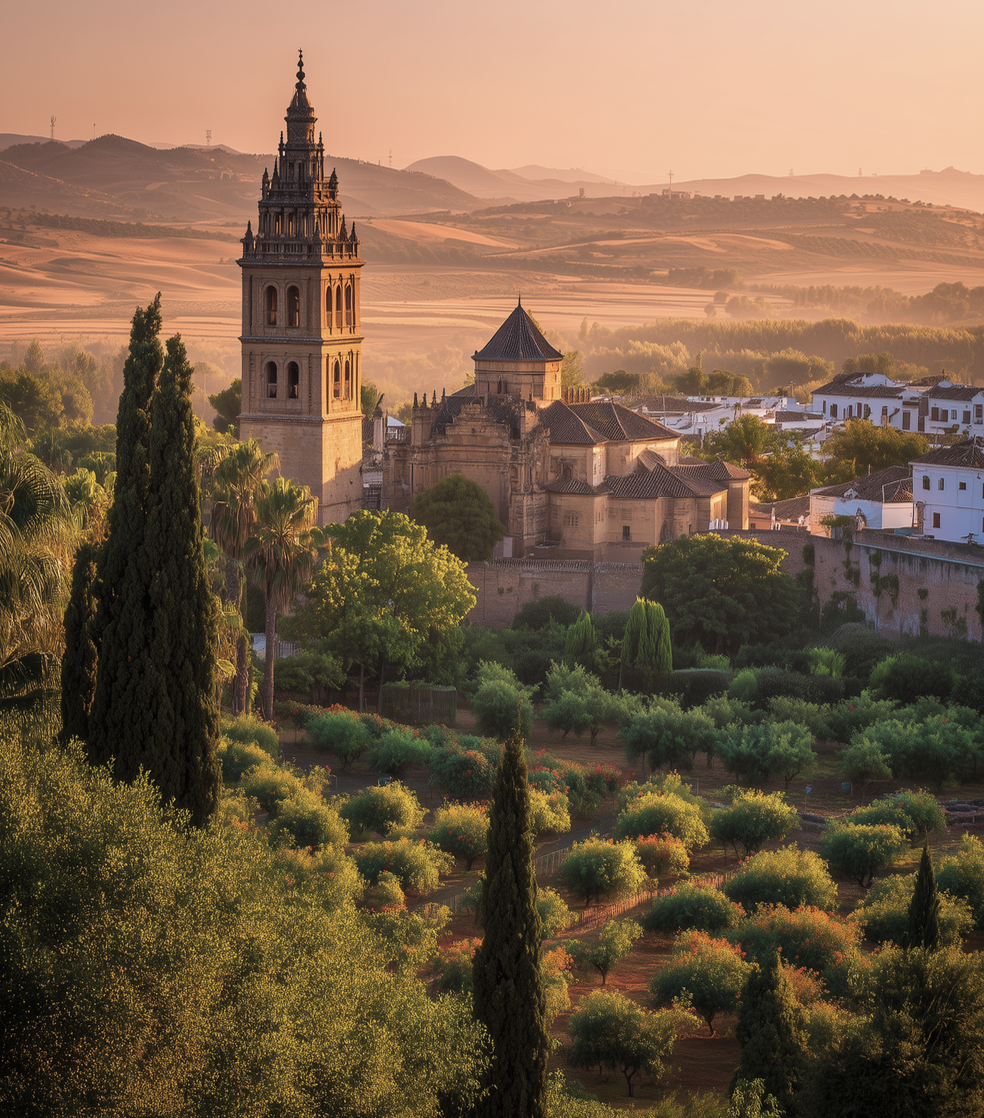
Urban Harmony and Innovation in Córdoba
During the ninth to eleventh centuries, while medieval European cities experienced decline, urban centres in the East, such as Baghdad, Damascus, and Cairo, flourished in what historians term the “Islamic Period of Urbanisation.”[1] Among the most distinguished cities of this period was Córdoba, the capital of Umayyad Al-Andalus, which reached its zenith in the tenth century under the rule of Abd al-Rahman III (r. 912-961) and Al-Hakam II (r. 961-976). Renowned by contemporary and modern historians as the era’s “greatest city in the world,” Córdoba exemplified a sophisticated and Islamic approach to urban planning that balanced private residences, public spaces, and climate-sensitive architecture.[2] By the tenth century, the population of Córdoba most likely surpassed 100,000 inhabitants, making it the largest city in Europe alongside Constantinople, and possibly reaching as many as 500,000 residents at its peak.[3]
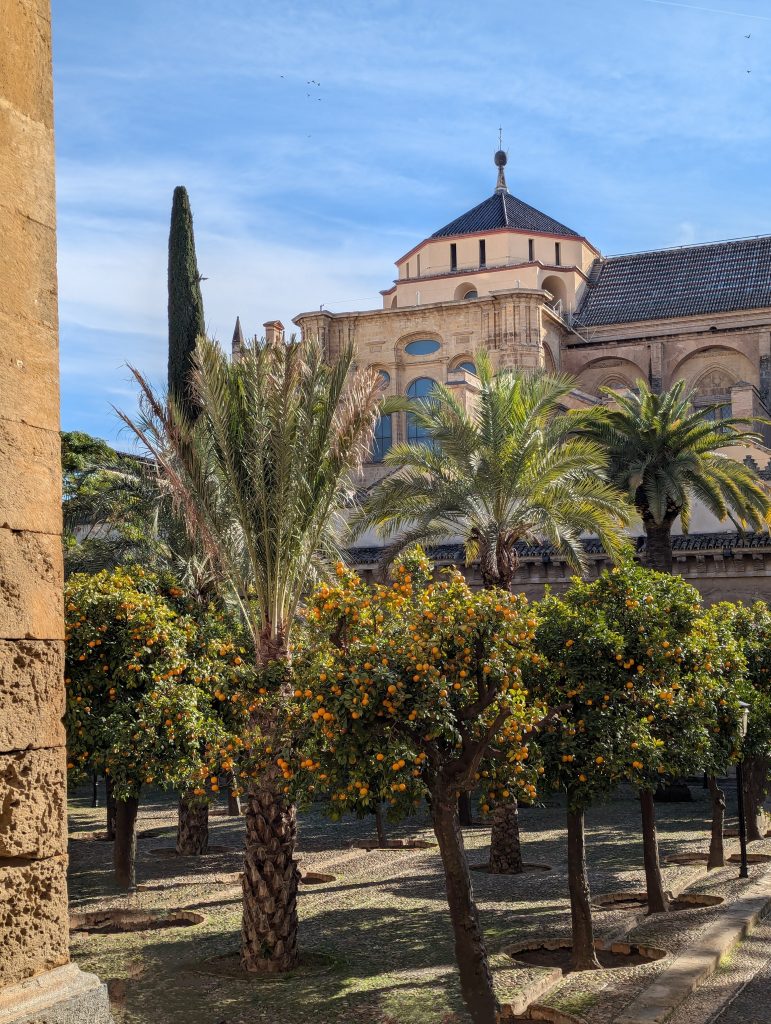
This article explores how Umayyad Córdoba maintained a distinct harmony between public and private life, with a particular focus on architectural privacy, green spaces, and the integration of public infrastructure, thereby offering a model for sustainable urban planning. The city’s development represents a remarkable synthesis of Eastern and Western urban traditions, incorporating Umayyad Syrian heritage, Roman classical concepts, and local Visigothic methods and materials, while adapting to the specific characteristics of the Iberian Peninsula.[4] This article examines the ways in which Umayyad architects and planners upheld the principles of privacy and communal living while fostering a sustainable and thriving urban setting.
In contrast to many of its European counterparts, which suffered from overcrowding and inadequate sanitation, Córdoba exemplified a meticulously planned urban environment that seamlessly integrated private dwellings, public spaces, and essential infrastructure. The city’s urban expansion during the caliphal period was characterised by systematic planning, with Abd al-Rahman III driving the first great expansion based on a grid (orthogonal) layout that created large urban blocks formed by modest and functional houses.[5] This planned development extended into the extensive western arrabales (suburbs) of the city, where archaeological evidence reveals sophisticated residential quarters built around central courtyards that embodied Islamic principles of domestic privacy while contributing to the city’s overall urban fabric.[6]
Domestic Architecture and Residential Privacy
One of the defining features of Islamic urban planning is the emphasis on privacy within domestic architecture, as Islam portrays residential privacy as a fundamental right of citizens.[7] In Córdoba, the design of homes and neighbourhoods was deeply influenced by this principle, creating a distinctive urban landscape that prioritised both individual seclusion and community cohesion. The archaeological record from Córdoba’s arrabales reveals a remarkably consistent approach to domestic architecture that reflects broader Islamic urban planning principles while adapting to local conditions and materials.[8]
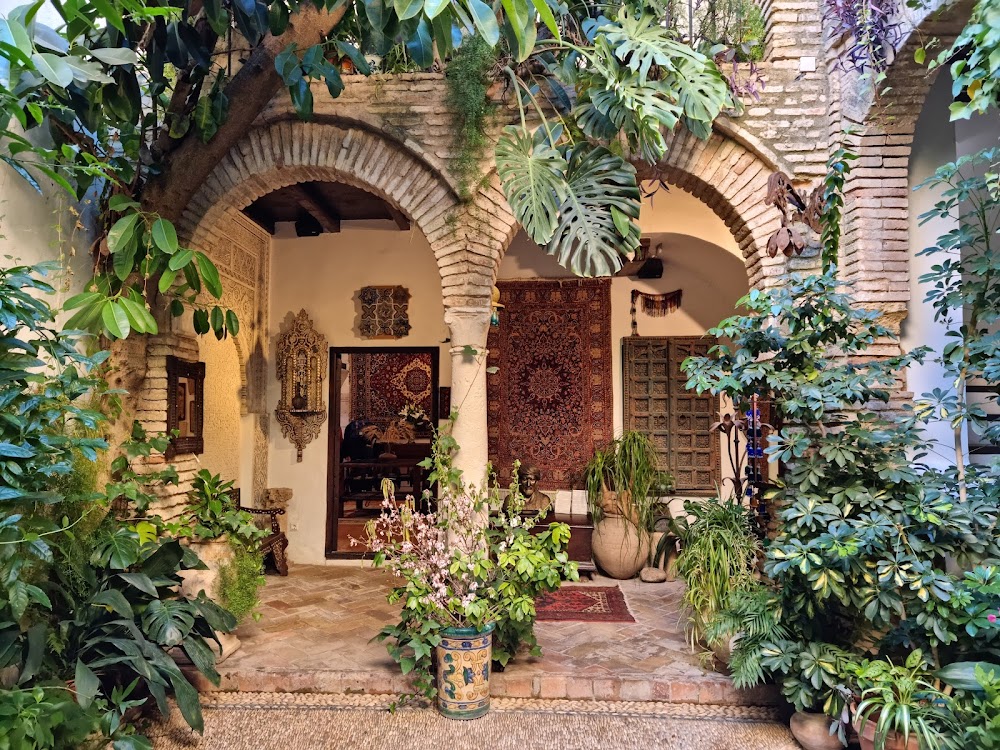
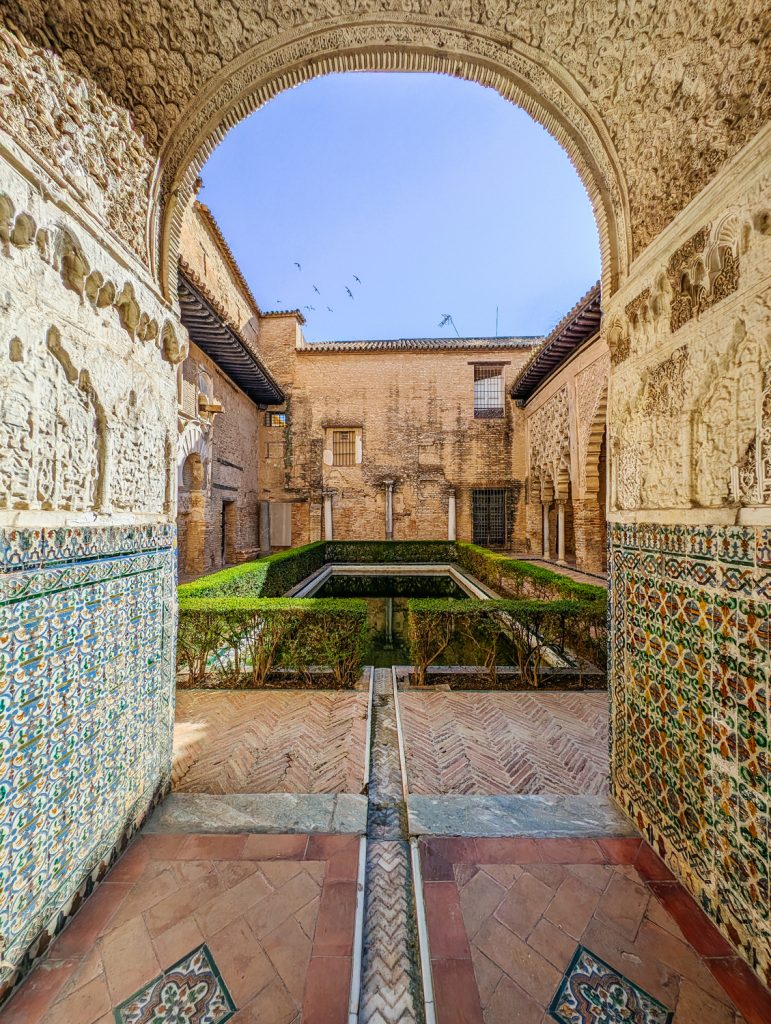
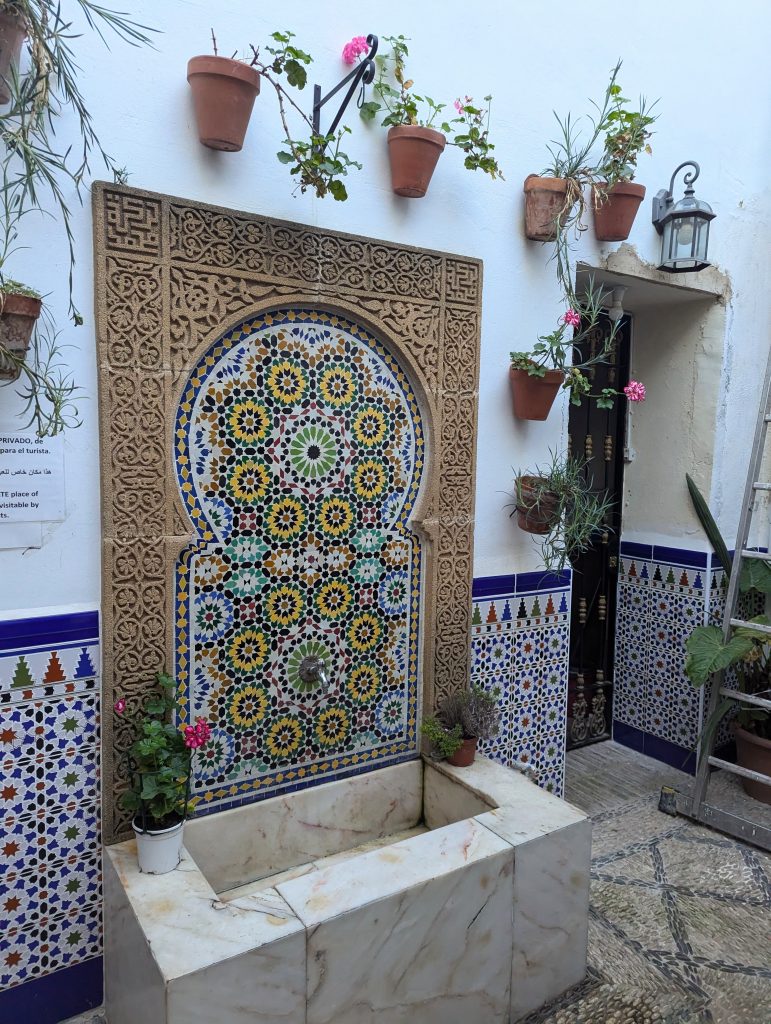
Andalusian houses were constructed around central courtyards (patios), ensuring both seclusion and natural ventilation to help with cooling in the warmer Mediterranean climate. These private centres of the house became physical places for citizens to cultivate and foster Islamic principles of family kinship and serenity.[9] The courtyard house model found in Córdoba represents the most basic type to which central courtyard houses, typical of traditional Islamic societies, can be reduced. Archaeological evidence from the Huerta de Santa Isabel site reveals that the majority of houses (69.56%) followed a rectangular plan with the courtyard in the centre, taking up most of the space, and two built bays on the shorter sides of the rectangle.[10]
To protect this sacred domestic space, the exterior facades of the houses were adorned with windows oriented inward rather than facing the street, preventing visibility from outsiders and maintaining the Islamic principle of visual privacy.[11] The typical Islamic zeal for privacy is expressed in the facade of houses, which are plain and do not display the social or economic status of the inhabitants, creating a sense of equality in the urban streetscape.[12] Another remarkable multi-featured architectural element found in homes was the mashrabiya, or lattice screens. Usually made of wood, these beautiful geometrically carved screens covered balconies and windows to provide privacy, shade, and to regulate moisture and airflow in spaces. In addition to this, tall, thick walls constructed with rammed-earth helped to fortify the houses and provide temperature regulation.
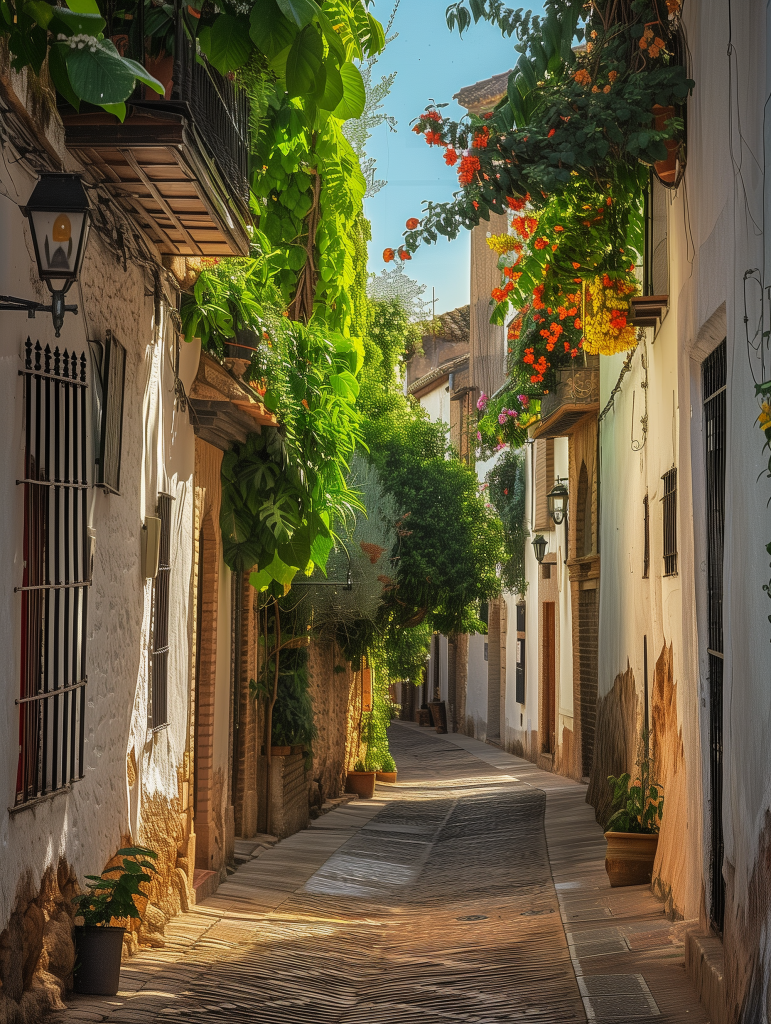
The arrangement of streets further reinforced this commitment to privacy. Residential areas were characterised by winding alleys and cul-de-sacs, restricting through traffic and limiting external exposure to private dwellings. This urban morphology created what scholars describe as a tripartite system of public, semi-public, and private spaces, varying in degree of accessibility and enclosure.[13] The narrow, dead-end streets served multiple functions: they separated public and private territories, provided natural cooling through shade, and created intimate neighbourhood spaces that fostered community interaction while maintaining residential privacy.[14]
Córdoba was also one of the first cities to have lighting in the streets, providing a blanket of safety to citizens during the dark Spanish nights. This innovation in urban infrastructure demonstrates the Umayyad commitment to creating a livable urban environment that supported both daytime and nighttime activities, contributing to the city’s reputation as a centre of learning and culture that operated around the clock.[15]
“Third Places”: Public Infrastructure and Social Harmony
While private residences prioritised peaceful seclusion, Umayyad Córdoba was also distinguished by its vibrant public life, facilitated by an extensive and accessible urban infrastructure riddled with what urban sociologist Ray Oldenburg would later term “third places.”[16] Oldenburg coined this term to characterise spaces for citizens to gather outside of their homes (the first place) and their work (the second place). To enhance urban social life, these widely accessible places are integral to developing communities that value growth through fostering social interaction and, in turn, equality.[17] While there remains a struggle for planners to incorporate these spaces in modern-day planning, Córdoba was a city bursting with third places that served as the foundation for its remarkable social cohesion and intellectual vitality.
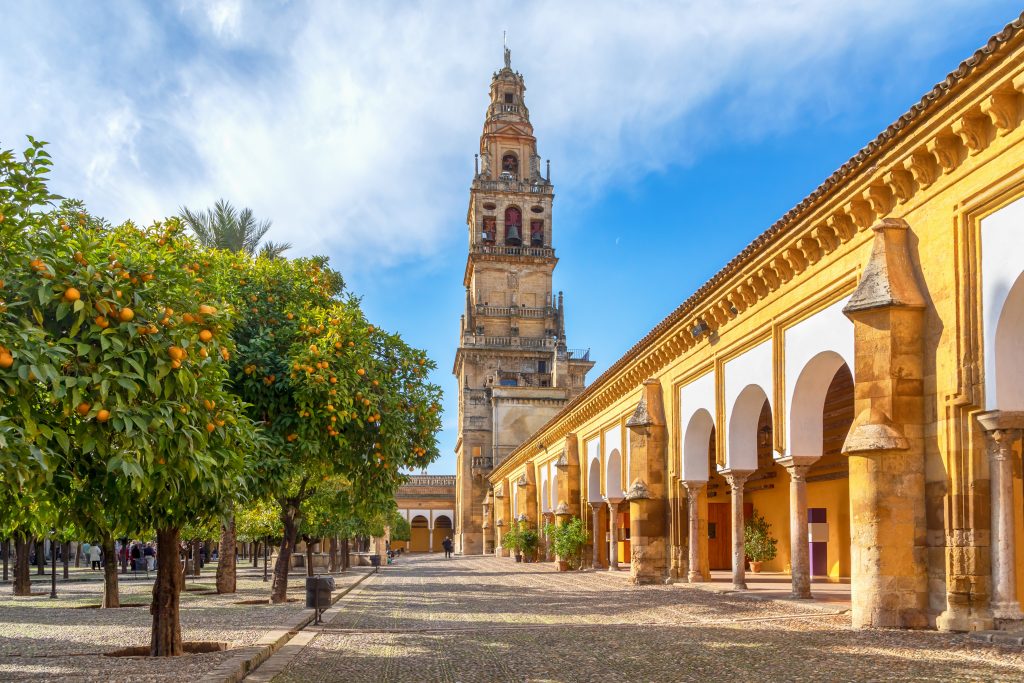
The biggest, and most central, third place was the Grand Mosque of Córdoba, which Oldenburg would describe as “the heart of a community’s social vitality, the grassroots of democracy.”[18] The Mosque was not only a place of prayer for Muslims but also served as the city’s spiritual and intellectual epicentre. The building and its beautiful orange-tree courtyard (Patio de los Naranjos) functioned not only as a place of worship but also as a centre for education, administration, and communal interaction for those of all faiths.[19] In its original form, the Great Mosque was built to hold the entire Muslim community of the city, and as that community grew, so did the mosque, with successive expansions reflecting the city’s demographic and economic growth.[20]
During Al-Hakam II’s reign, his immense love of books led to the construction of extensive libraries that attracted scholars and students from all over the world, fueling a cultural renaissance. Al-Hakam II amassed a library of approximately 400,000 volumes, with the catalogue alone consisting of forty-four volumes.[21] This library employed over 500 people and became the centrepiece of a massive translation effort that saw countless texts translated from Latin and Greek into Arabic by joint committees of Arab Muslims and Iberian Mozarab Christians.[22] The presence of this library helped make Córdoba the greatest book market in the western world during the tenth century, with a total of seventy libraries throughout Muslim Spain, including universities in Córdoba, Seville, Málaga, and Granada.[23]
Similarly, the city’s markets (souq) were “third places” that functioned as economic and social hubs, facilitating commerce while promoting cross-cultural exchanges among traders of every background. These markets were not merely commercial spaces but served as vital social institutions where different communities—Muslim, Christian, and Jewish—interacted daily, creating a cosmopolitan atmosphere that was rare in medieval Europe.[24] Accessible urban planning also ensured that market streets were shaded and well-supplied with water fountains, enhancing the comfort and convenience of both merchants and customers. The markets were centred around the mosque, concentrating the flow of public social activity to the city’s centre and were separated from the private residential areas through a means of “green space,” creating a clear hierarchy of urban functions while maintaining connectivity between different districts.[25]
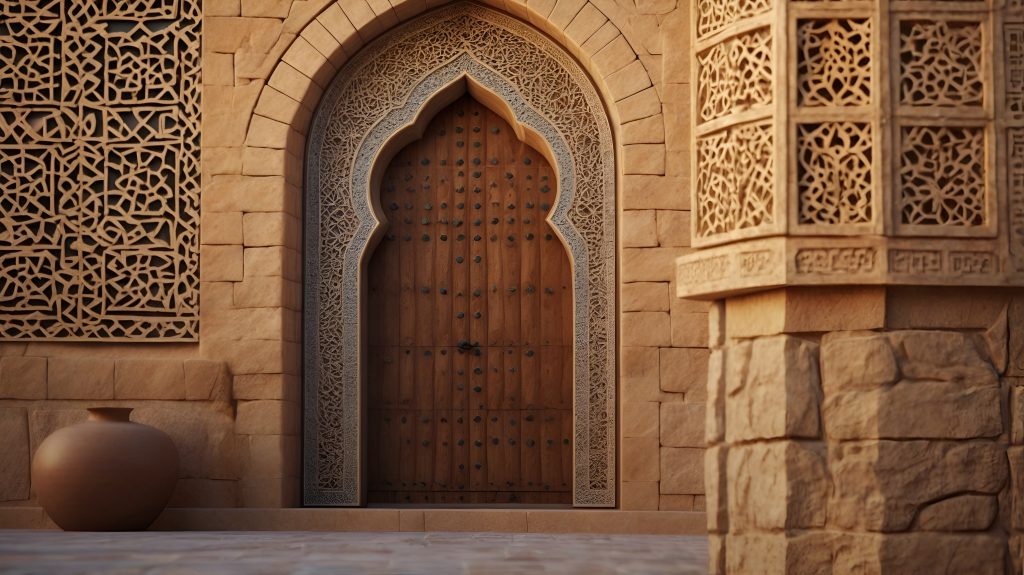
The integration of these third places within Córdoba’s urban fabric created what contemporary sources describe as a city where “Muslims, Christians, and Jews lived and worked together, greatly expanding human knowledge especially in philosophy, religion, and the sciences.”[26] This remarkable social harmony was not accidental but was the result of deliberate urban planning that provided spaces for different communities to interact while respecting their distinct cultural and religious practices. The success of this model is evidenced by the city’s sustained growth and prosperity throughout the tenth and early eleventh centuries, when it served as a beacon of learning and tolerance in medieval Europe.
The Umayyads: Masters of Water
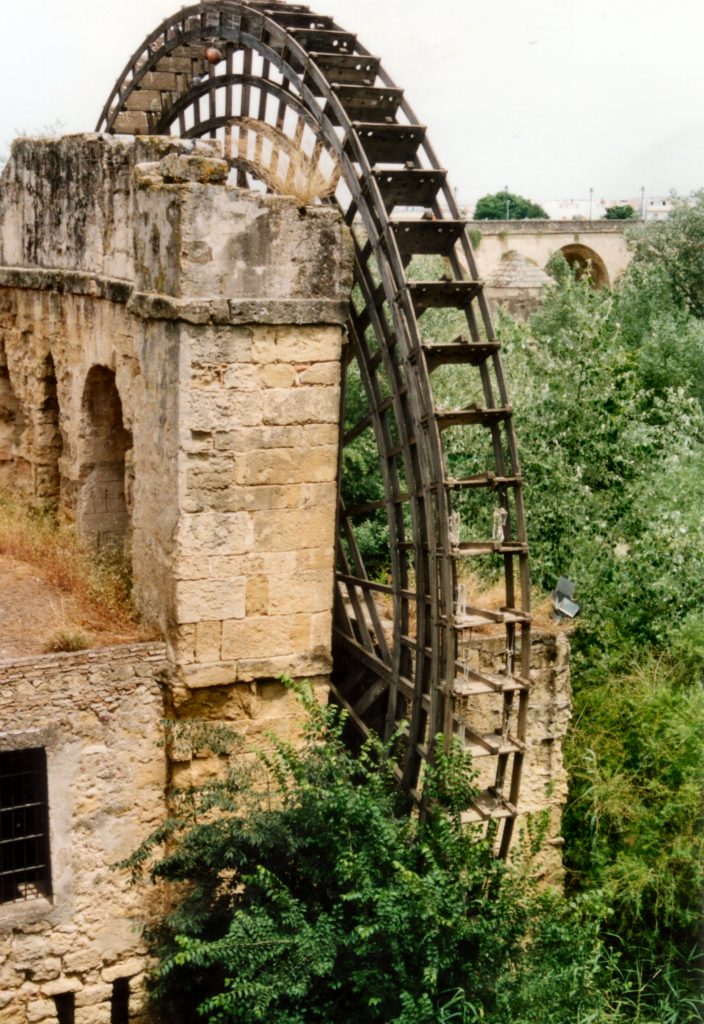
Water management represented one of the most sophisticated achievements of Umayyad Córdoba, demonstrating the caliphate’s mastery of hydraulic engineering and its commitment to creating a sustainable urban environment. The Umayyads inherited and significantly enhanced the Roman water infrastructure, transforming Córdoba into a city where abundant fresh water flowed to homes, gardens, fountains, and public baths.[27] This hydraulic mastery was not merely a technical achievement but a fundamental component of the city’s social, religious, and aesthetic life, reflecting the Islamic understanding of water as both a practical necessity and a symbol of divine blessing.
The foundation of Córdoba’s water system rested on the rehabilitation and expansion of Roman aqueducts, particularly the Aqua Augusta, which the Umayyads maintained and improved to carry water from mountain streams to the city and surrounding agricultural areas.[28] Archaeological evidence from the western suburbs reveals a sophisticated network of hydraulic installations that ensured access to clean water throughout the expanding urban areas. These systems included a particular model of secondary ducts made from rectangular modules of calcarenite stone, sculpted with U-shaped tubes measuring 0.6 to 0.7 meters long, suggesting the presence of specialised workshops dedicated to manufacturing these standardised hydraulic components.[29]
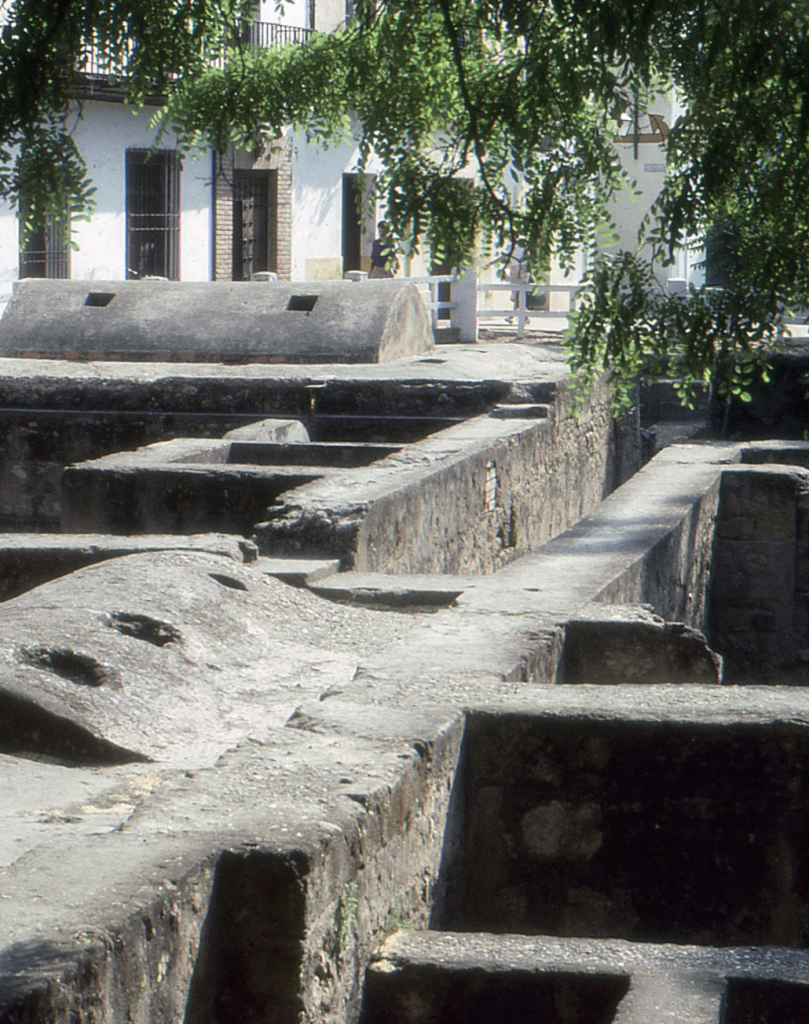
The scale and complexity of Córdoba’s water infrastructure indicate centralised planning, likely overseen by the caliph or his close advisors. Under Abd al-Rahman III and his successors, the city developed an elaborate network that not only supplied domestic needs but also supported the extensive gardens and agricultural areas that surrounded the urban core.[30] The system incorporated various types of installations, including open tanks and basins for different purposes: tanks with double stairs for courtyard access, decantation basins for water purification, immersion pools for ritual washing, and washbasins for domestic use.[31]
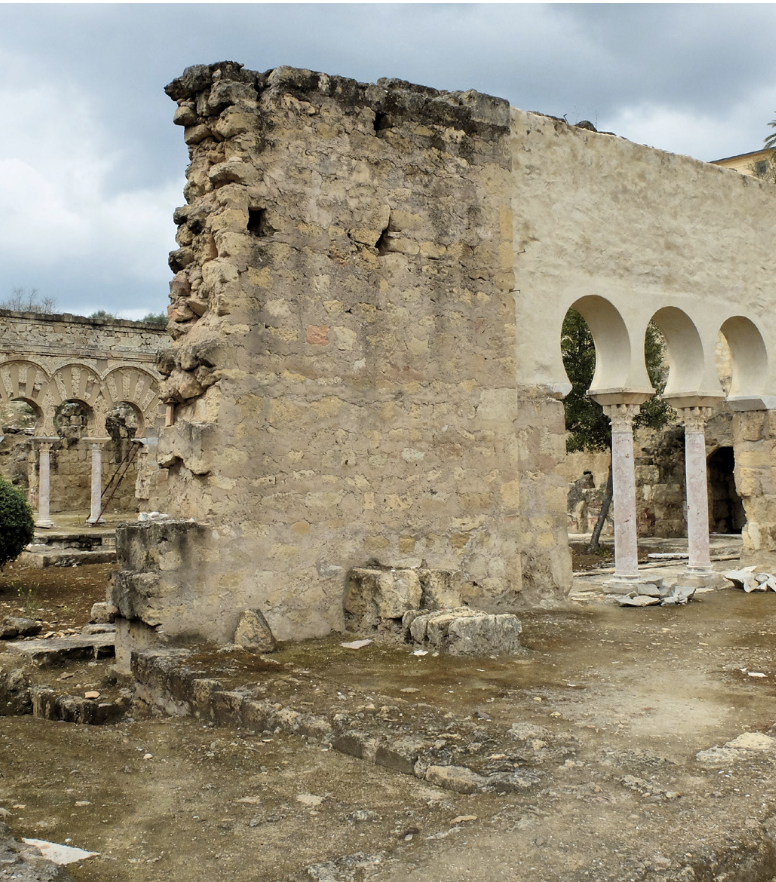
The crown jewel of Umayyad hydraulic engineering was the water system of Madinat al-Zahra, the palatial city built by Abd al-Rahman III beginning in 941 CE. This complex featured cutting-edge water management systems that supplied the city with water from distant sources through an intricate network of aqueducts, channels, and distribution systems.[32] The vast network of pipes that supplied water to the numerous fountains, tanks, and other devices throughout the palace complex demonstrated the Umayyads’ ability to combine practical engineering with aesthetic considerations, creating water features that served both functional and symbolic purposes.[33]
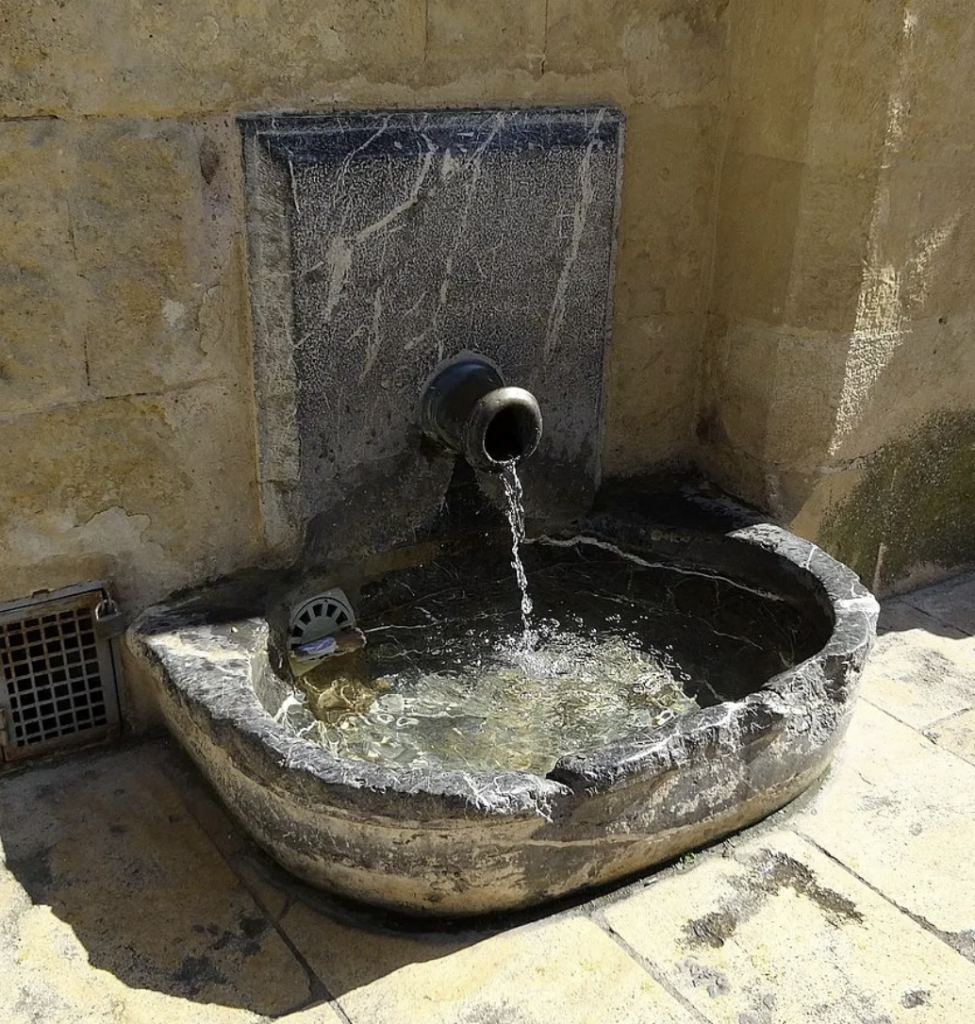
The Umayyad approach to water management also reflected broader Islamic principles regarding the communal ownership and equitable distribution of water resources. In Al-Andalus, legal frameworks recognised the right of anyone, Muslim or otherwise, to drink water to quench their thirst and to water their animals, establishing water as a fundamental human right rather than a commodity.[34] This principle guided the development of public fountains throughout the city, ensuring that clean water remained accessible to all residents regardless of their social or economic status.
Urban Sanitation
Córdoba’s approach to urban sanitation was revolutionary for its time, establishing a comprehensive system of public health measures that would not be matched in Europe until the twentieth century. Recent archaeological research has revealed that between the 10th and 13th centuries, Córdoba developed an elaborate network of sewers, well-maintained cesspits, and community-driven cleanliness initiatives that reflected both Islamic principles of hygiene and sophisticated urban planning.[35] This system represented a remarkable synthesis of religious obligation, civic responsibility, and engineering innovation that set Córdoba apart from its European contemporaries.
Central to Córdoba’s sanitation success was its sophisticated sewer system, which served the walled Medina during its time as the capital of the Umayyad Caliphate. Likely initiated under Abd al-Rahman III and expanded during Almanzor’s reign, this underground network was constructed using durable materials such as ashlar masonry, sealed with lime mortar and topped with stone slabs.[36] Wastewater was efficiently channelled through this system and ultimately discharged into the Guadalquivir River, demonstrating an understanding of hydraulic principles that prevented contamination of the urban water supply.
The longevity of Córdoba’s sewer system testifies to its superior engineering, with parts remaining operational even after the Christian conquest in 1236, and some sections continuing to function for centuries thereafter.[37] This durability contrasted sharply with sanitation systems in other medieval European cities, which typically relied on open sewers or rudimentary waste disposal methods that contributed to frequent outbreaks of disease.
In the residential areas outside the city centre, sanitation relied on a different but equally sophisticated system of cesspits connected to latrines in private homes. By the 10th century, latrines had become a common feature in Andalusī homes, often positioned near the street to facilitate waste disposal through ceramic drains.[38] These pits were typically shallow and strategically located away from water sources, allowing the soil to act as a natural filter to safeguard groundwater. This understanding of sanitation principles was shared by both authorities and residents, reflecting a collective awareness of public health that was rare in medieval Europe.
The archaeological record reveals that urban planning in certain suburban districts included provisions for latrines from the outset, a feature not commonly found in other cities of the time.[39] In some cases, cesspits were shared among neighbouring households, typically with mutual consent and often within extended families. To avoid contamination, residents were careful about placing cesspits in closed alleyways, ensuring that all neighbours agreed before proceeding, demonstrating a sophisticated understanding of community health principles.
The culture of cleanliness in Córdoba extended beyond mere infrastructure to become a communal obligation embedded in legal norms and social expectations. Residents were responsible for maintaining the cleanliness of the areas directly in front of their homes, a practice supported by the Islamic legal principle of fina’, which emphasised individual responsibility for local cleanliness.[40] Municipal officials, including the muhtasib (market inspector) and the qadi (judge), had the authority to intervene when necessary, particularly to prevent water contamination or resolve disputes related to sanitation practices.
The city’s commitment to public hygiene was further demonstrated by its extensive network of public baths (hammams). Córdoba reportedly had 300 public baths, serving its population of approximately half a million inhabitants.[41] These facilities provided not only for ritual ablutions required by Islamic practice but also served as centres for social interaction and community health. The hammams were equipped with sophisticated heating and water circulation systems, featuring hot, warm, and cold rooms that promoted both physical cleanliness and social cohesion.
From Water Comes Life: Green Spaces and Vegetation
The integration of green spaces and vegetation throughout Córdoba represented one of the most distinctive features of Umayyad urban planning, reflecting both practical environmental considerations and profound spiritual symbolism rooted in Islamic concepts of paradise. The city’s gardens, courtyards, and planted areas were not merely decorative elements but constituted essential components of an urban ecosystem that provided cooling, air purification, food production, and spaces for contemplation and social interaction.[42] This comprehensive approach to urban greenery demonstrated the Umayyads’ understanding of the interconnections between human well-being, environmental health, and spiritual fulfilment.
The design principles underlying Córdoba’s green spaces drew heavily from Persian garden traditions, which had been transmitted to Al-Andalus through the broader Islamic cultural network. These gardens typically featured the chahar-bagh (four-fold garden) pattern, symbolising the four rivers of paradise described in the Quran.[43] The geometric organisation of these spaces reflected divine order and harmony, with water channels dividing planted areas into quadrants that were irrigated through sophisticated systems of channels, pools, and fountains.
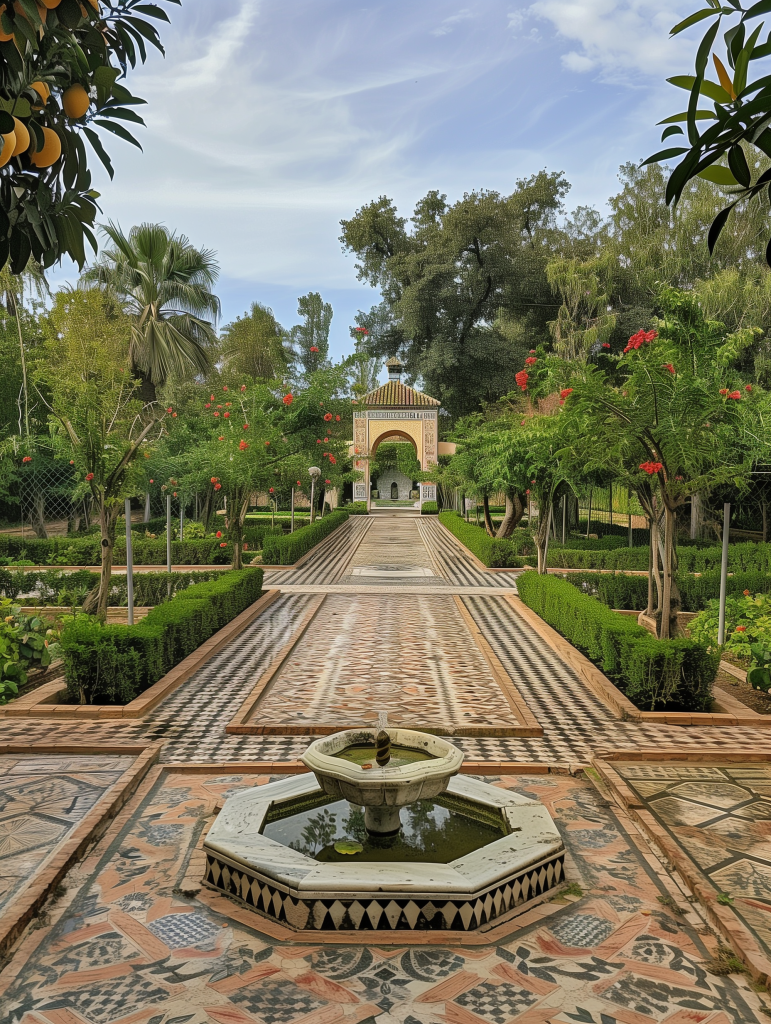
The most spectacular example of this garden tradition was found in Madinat al-Zahra, where the palace complex featured extensive gardens distributed across three terraces. The middle level contained a garden unevenly distributed into four quadrants marked by walkways, with each quadrant irrigated by channels that supplied water to flowerbeds surrounding pools and fountains.[44] These gardens served multiple functions: they provided cooling through evapotranspiration, created microclimates that moderated the harsh Andalusian summer heat, and offered spaces for recreation and contemplation that were essential to court life.
Archaeological evidence from the House of the Pool at Madinat al-Zahra reveals the sophisticated integration of water and vegetation that characterised Umayyad garden design. The flower beds surrounded a small pool supplied by a bronze animal fountain, creating a harmonious composition that combined aesthetic beauty with practical cooling effects.[45] The Prince’s Garden in the Casa de Jafar, measuring 20 by 19 meters, exemplified the perfect preservation of these design elements, featuring a fountain that filled a pool and channels that irrigated the surrounding flowerbeds.[46]
Within the city of Córdoba itself, the most famous example of Islamic garden design was the Patio de los Naranjos (Court of the Orange Trees) adjacent to the Great Mosque. This courtyard, planted with orange trees arranged in geometric patterns, served both practical and symbolic functions. The trees provided shade and cooling for worshippers, while their arrangement reflected the ordered beauty of divine creation.[47] The Great Mosque of Córdoba contains what is considered the world’s oldest continuously planted Islamic garden, demonstrating the enduring nature of these design principles.[48]
The integration of green spaces extended beyond formal gardens to encompass the entire urban fabric. Private courtyards in residential areas were typically planted with fruit trees, herbs, and flowering plants that provided food, medicine, and aesthetic pleasure while contributing to the overall cooling of the urban environment.[49] The narrow streets of the city were often shaded by vegetation, creating a network of green corridors that connected private and public spaces while providing relief from the Mediterranean sun.
The symbolic significance of these green spaces cannot be understated. In Islamic tradition, gardens represent earthly manifestations of paradise, offering believers a foretaste of the eternal garden promised in the afterlife.[50] The presence of water, shade, and fragrant plants created environments that encouraged contemplation and spiritual reflection, supporting the intellectual and religious life that flourished in Córdoba during the Umayyad period.
The agricultural areas surrounding Córdoba were equally sophisticated, featuring irrigation systems known as acequias (from the Arabic al-saqiyya, meaning “to quench”) that distributed water from rivers and springs to cultivated fields.[51] These systems supported the production of a diverse range of crops, including citrus fruits, almonds, olives, and various vegetables that supplied the urban population while creating a green belt around the city that contributed to its overall environmental health.

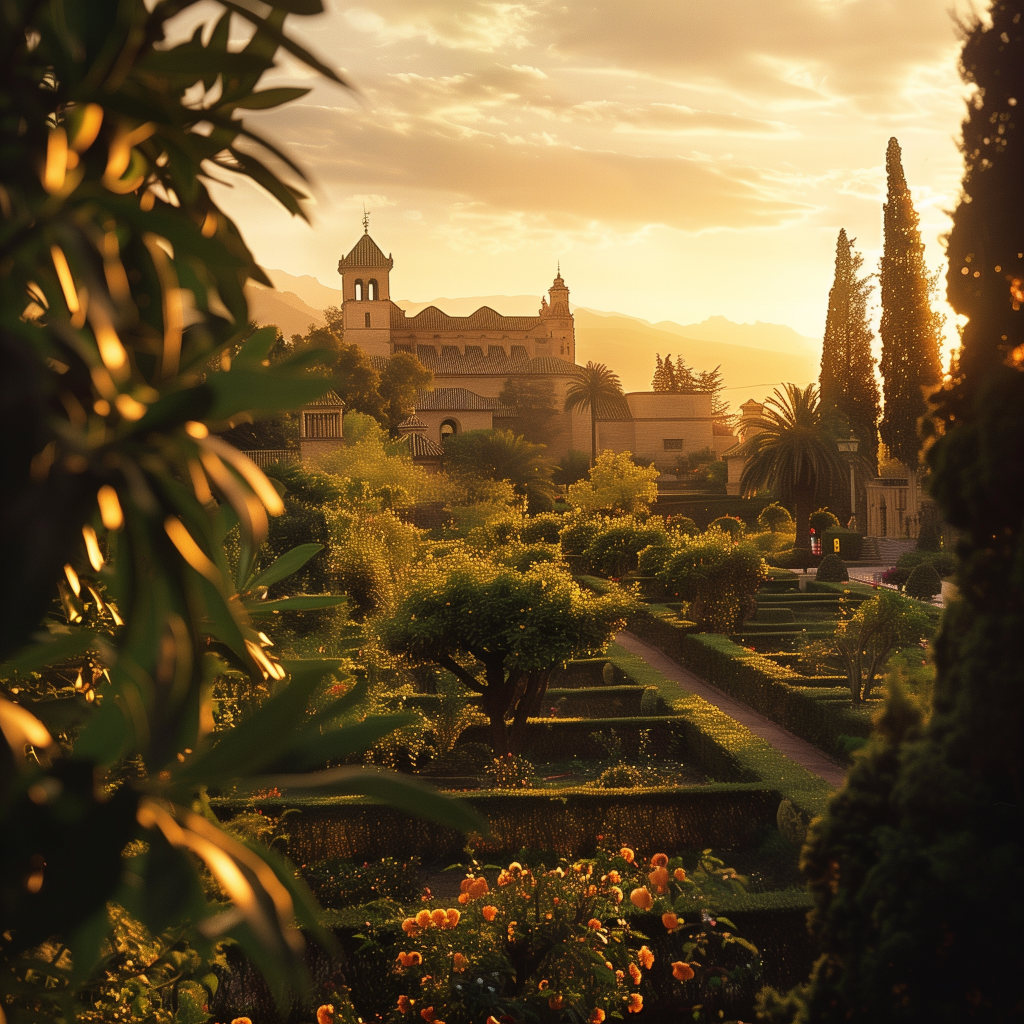
The Umayyad approach to urban vegetation also demonstrated remarkable ecological wisdom. The selection of plant species was carefully considered to ensure compatibility with the Mediterranean climate while maximising benefits for human inhabitants. Drought-resistant species were favoured for their ability to thrive with minimal irrigation, while aromatic plants such as jasmine, roses, and herbs created sensory experiences that enhanced the quality of urban life.[52] This ecological approach to urban planning created a sustainable model that supported both human communities and natural ecosystems, offering valuable lessons for contemporary urban designers seeking to create environmentally responsible cities.
Córdoba’s Legacy in Modern Urban Planning
The principles that governed Umayyad Córdoba’s urban design continue to inform contemporary discussions on sustainable city planning, offering valuable insights for addressing modern urban challenges, including climate change, social inequality, and environmental degradation. The sophisticated integration of privacy, community spaces, water management, and green infrastructure that characterised medieval Córdoba provides a compelling model for contemporary urban designers seeking to create livable, resilient, and socially cohesive cities.[53] As urban populations continue to grow and climate pressures intensify, the lessons from Córdoba’s thousand-year-old urban planning strategies have gained renewed relevance in academic and professional planning circles.
The emphasis on privacy within residential architecture, exemplified by Córdoba’s courtyard houses, remains highly relevant in contemporary urban design, particularly in regions with hot climates where natural ventilation and cooling are essential for energy efficiency and human comfort.[54] Modern architects and urban planners have increasingly recognised the value of courtyard houses as climate-responsive structures that can create localised microclimates tailored to specific climatic conditions.[55] Contemporary projects in hot-climate regions from the Middle East to Australia have drawn inspiration from Islamic courtyard design principles, incorporating central courtyards that provide natural ventilation, daylight, and vegetation into interior spaces while maintaining privacy for residents.[56]
Research has demonstrated that traditional courtyard houses are particularly energy efficient in hot-dry and warm-humid climates, offering superior thermal performance compared to conventional modern housing designs.[57] The courtyard form’s ability to optimise natural ventilation and climate control through the strategic arrangement of rooms around a central open space has made it an increasingly attractive model for sustainable architecture in an era of rising energy costs and environmental consciousness.
The integration of water management systems pioneered in Córdoba has also influenced modern hydraulic engineering efforts aimed at creating eco-friendly water distribution systems and sustainable urban water cycles.[58] Contemporary urban planners have drawn lessons from Islamic water management principles, particularly the emphasis on equitable distribution, conservation, and the integration of water features into urban design for both practical and aesthetic purposes. The concept of water as a public good, enshrined in Islamic law and exemplified in Córdoba’s extensive network of public fountains and baths, has informed modern discussions about water justice and the human right to water access.
The city’s approach to green infrastructure, with its sophisticated integration of gardens, courtyards, and planted areas throughout the urban fabric, has become increasingly relevant as contemporary cities grapple with urban heat island effects, air pollution, and the need for climate adaptation.[59] Modern urban planning increasingly recognises the value of distributed green spaces that provide cooling, air purification, and social benefits, echoing the Umayyad approach to urban vegetation. The principles of ecological wisdom demonstrated in Córdoba’s plant selection and garden design—including the use of drought-resistant species and the creation of microclimates—offer valuable guidance for contemporary sustainable landscape design.
The concept of “third places” that flourished in Córdoba has gained particular attention in contemporary urban planning discourse, as cities struggle to create spaces that foster social interaction and community cohesion in an increasingly digital age.[60] The integration of religious, educational, commercial, and social functions within accessible public spaces, as exemplified by Córdoba’s mosque-library-market complex, provides a model for contemporary mixed-use development that prioritises community building and social sustainability.
European Comparison
To fully appreciate the revolutionary nature of Umayyad Córdoba’s urban achievements, it is essential to understand the stark contrast between Islamic and Christian European cities during the medieval period. The disparity between these two urban traditions was so pronounced that it prompted the historian Victor Robinson to observe: “Europe was darkened at sunset, Cordova shone with public lamps; Europe was dirty, Cordova built a thousand baths; Europe was covered with vermine, Cordova changed its undergarments daily; Europe lay in mud, Cordova’s streets were paved; Europe’s palaces had smoke-holes in the ceiling, Cordova’s arabesques were exquisite; Europe’s nobility could not sign its name, Cordova’s children went to school; Europe’s monks could not read the baptismal service, Cordova’s teachers created a library of Alexandrian dimensions.”[61]
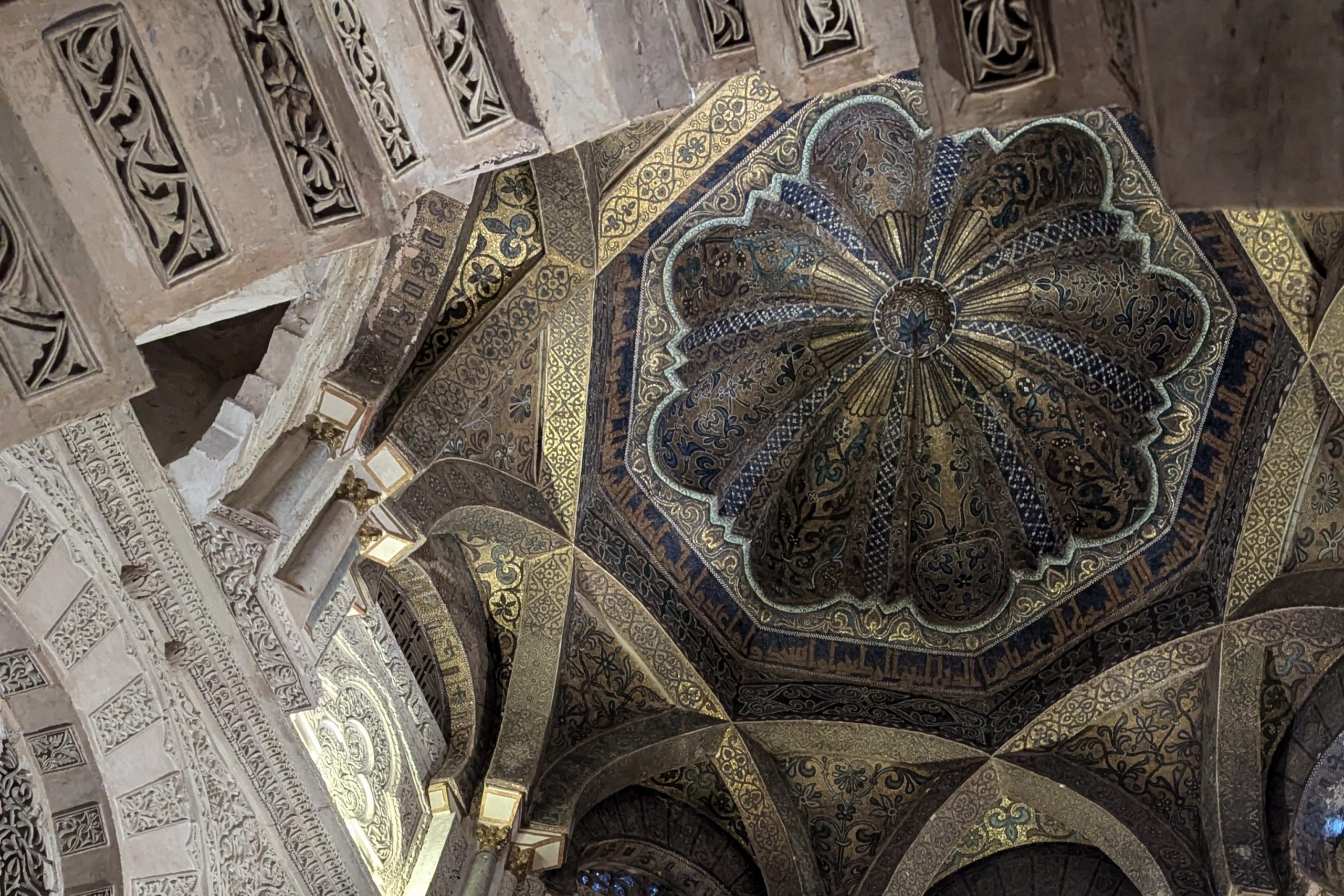
This comparison, while perhaps somewhat hyperbolic, reflects genuine and documented differences in urban development, public health, education, and cultural achievement between Islamic Al-Andalus and medieval Christian Europe. The contrast was particularly striking in areas of literacy, sanitation, and urban infrastructure, where Córdoba and other Islamic cities had achieved levels of sophistication that would not be matched in Europe until the Renaissance or later.
The question of literacy provides a particularly illuminating example of this disparity. While Córdoba boasted extensive libraries, schools, and a culture that valued learning across religious and ethnic boundaries, much of medieval Europe struggled with basic literacy even among the nobility. The case of Charlemagne (742-814 CE), often celebrated as a patron of learning, illustrates this contrast: despite his efforts to promote education through the Carolingian Renaissance, Charlemagne himself remained largely illiterate throughout his life, requiring texts to be read aloud to him and dictating rather than writing his correspondence.[62] This situation was not uncommon among European nobility of the period, whereas in Córdoba, literacy was widespread among the urban population and was actively promoted through an extensive network of schools and libraries.
The disparity in urban sanitation and public health was equally pronounced. While Córdoba had developed sophisticated sewer systems, public baths, and waste management practices that would remain unmatched in Europe for centuries, medieval European cities typically relied on rudimentary waste disposal methods that contributed to frequent outbreaks of disease.[63] The contrast was so stark that medieval European cities were characterised by poor hygiene and sanitation that contributed to the spread of disease, particularly during the devastating plague years of the mid to late 14th century.[64]
In terms of urban infrastructure, Córdoba’s paved streets, public lighting, and sophisticated water distribution systems stood in sharp contrast to the muddy, poorly lit streets that characterised most medieval European cities. The city’s extensive network of public fountains, baths, and gardens created an urban environment that prioritised public health and quality of life in ways that were largely absent from contemporary European urban planning.
The intellectual and cultural achievements of Córdoba also far exceeded those of medieval European centres during the same period. While Islamic rulers in the East, such as Harun al-Rashid and Al-Ma’mun, were reading Greek and Persian philosophy and patronising translation movements that preserved and expanded upon classical knowledge, their contemporaries in the West, including Charlemagne, struggled with basic literacy.[65] This intellectual disparity was reflected in the urban environment, where Córdoba’s libraries, schools, and centres of learning created a culture of intellectual inquiry that attracted scholars from across the known world.
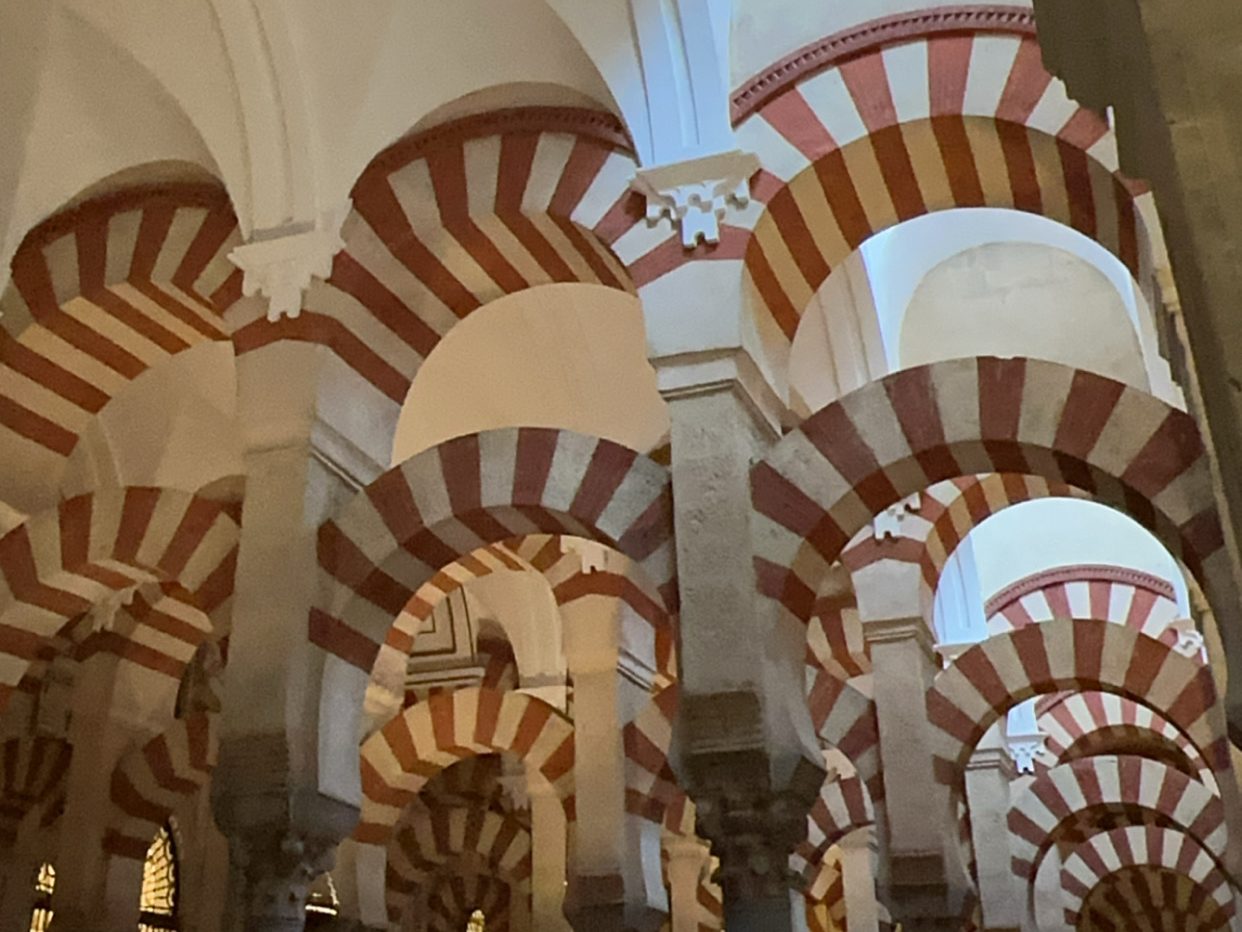
The architectural and artistic achievements of Córdoba also demonstrated a level of sophistication that was unmatched in medieval Europe. While European palaces of the period were characterised by crude construction with smoke-holes in ceilings for ventilation, Córdoba’s buildings featured exquisite arabesques, sophisticated ventilation systems, and architectural innovations that combined aesthetic beauty with practical functionality.[66] The city’s integration of art, architecture, and urban planning created an environment that was both beautiful and livable, setting a standard that would not be achieved in European cities until much later periods.
Lessons in Livability
When one walks through the city of Córdoba today among the remnants of Umayyad rule, it is natural to be in awe of the splendour of design exhibited in the surviving structures and to wonder what it must have felt like to experience the city during its prime. The archaeological and historical evidence reveals that Umayyad Córdoba represented a remarkable vision of Islamic urban planning in which private and public spaces were meticulously designed to ensure both social harmony and environmental sustainability.[67] The city’s architecture and infrastructure were carefully planned to support communal interaction while safeguarding individual privacy, creating an urban environment that balanced competing needs and values in ways that remain relevant for contemporary urban planning.
The lessons from Córdoba’s urban planning success extend far beyond historical curiosity to offer practical guidance for addressing contemporary urban challenges. The city’s innovative residential layouts, with their emphasis on courtyard houses and privacy-respecting street patterns, demonstrate how urban design can accommodate cultural values while providing practical benefits such as natural cooling and community interaction.[68] These principles have particular relevance for contemporary cities in hot climates, where energy-efficient cooling and culturally appropriate housing design are essential for sustainable development.
The city’s advanced hygiene infrastructure, including its sophisticated sewer systems and extensive network of public baths, offers valuable lessons for contemporary cities struggling with sanitation challenges and public health issues. Córdoba’s approach to sanitation as a community responsibility, supported by legal frameworks and municipal oversight, provides a model for contemporary urban governance that prioritises public health and environmental protection.[69] The city’s understanding of the connections between water management, waste disposal, and public health demonstrates a systems approach to urban planning that remains highly relevant for contemporary sustainable development.
The extensive green spaces and sophisticated water management systems that characterise Córdoba offer particularly valuable insights for contemporary cities facing climate change and environmental degradation. The city’s integration of gardens, courtyards, and planted areas throughout the urban fabric created a distributed network of green infrastructure that provided cooling, air purification, and social benefits while supporting biodiversity and ecological health.[70] This approach to urban greening, which combined practical environmental benefits with aesthetic and spiritual values, offers a compelling model for contemporary cities seeking to enhance resilience and livability in the face of climate change.
Perhaps most importantly, Córdoba’s success in creating vibrant “third places” that fostered cross-cultural interaction and community cohesion provides valuable lessons for contemporary cities struggling with social fragmentation and cultural division. The city’s ability to create spaces where Muslims, Christians, and Jews could interact productively while maintaining their distinct identities offers insights for contemporary multicultural urban planning.[71] The integration of religious, educational, commercial, and social functions within accessible public spaces created an urban environment that supported both individual fulfilment and community solidarity.
The enduring legacy of Córdoba’s urban planning achievements lies not only in its specific innovations but in its demonstration that cities can be designed to support human flourishing across multiple dimensions—environmental, social, cultural, and spiritual. Through its innovative integration of privacy and community, sustainability and prosperity, diversity and harmony, Córdoba set a precedent for urban development that prioritised quality of life for all residents regardless of their social, economic, or religious background.[72] The city’s success in creating an urban environment that was simultaneously beautiful, functional, and socially inclusive offers valuable inspiration for contemporary urban planners striving to create cities that are not only economically productive but also environmentally sustainable and socially just.
As contemporary cities face unprecedented challenges related to climate change, social inequality, and cultural diversity, the lessons from Córdoba’s thousand-year-old urban planning experiment remain remarkably relevant. The city’s demonstration that urban design can successfully balance competing values and needs while creating environments that support both individual privacy and community interaction offers hope and practical guidance for creating more livable, sustainable, and equitable cities in the 21st century and beyond.
[1]Hugh Kennedy, “The Historiography of Islamic Spain,” in The Formation of Al-Andalus, Part 1: History and Society, ed. Manuela Marín (Aldershot: Ashgate Variorum, 1998), 23-47.
[2]Carmen M. Tagle, “Transformations: Suburban Cordoba During the Umayyad Caliphate, 929-1009” (Master’s thesis, CUNY Graduate Center, 2018)
[3]“Mosque-Cathedral of Córdoba,” EBSCO Research Starters
[4]Tagle, “Transformations: Suburban Cordoba,” 15-18.
[5]“Corduba and Qurtuba,” Google Arts & Culture, accessed July 11, 2025
[6]Laura Aparicio Sánchez and Pedro Jiménez Castillo, “Domestic Architecture and Urban Expansion: Central Courtyard Elementary Houses in the arrabales of Córdoba (10th Century),” Arts 12, no. 2 (2023): 79
[7]Stefan Maneval, New Islamic Urbanism: The Architecture of Public and Private Space in Jeddah, Saudi Arabia (London: UCL Press, 2019), 45-67.
[8]Aparicio Sánchez and Jiménez Castillo, “Domestic Architecture and Urban Expansion,” 2-5.
[9]Besim S. Hakim, “Arabic-Islamic Cities: Building and Planning Principles” (London: KPI, 1986), 78-92.
[10]Aparicio Sánchez and Jiménez Castillo, “Domestic Architecture and Urban Expansion,” 8-12.
[11]Ibid., 15-18.
[12]Ibid., 16.
[13]“Islamic Urbanism and Access Regulation as a Guide to Contemporary Urban Design,” Journal of Engineering and Applied Science 69, no. 1 (2022): 45
[14]Stefano Bianca, Urban Form in the Arab World: Past and Present (London: Thames & Hudson, 2000), 156-178.
[15]“Urban Centers,” Cities of Light, accessed July 11, 2025
[16]Ray Oldenburg, The Great Good Place: Cafes, Coffee Shops, Bookstores, Bars, Hair Salons, and Other Hangouts at the Heart of a Community (New York: Paragon House, 1989), 16-42.
[17]Ibid., 24-28.
[18]Ibid., 42.
[19]“The Great Mosque of Cordoba,” Columbia University Medieval Architecture Project, accessed July 11, 2025.
[20]“Art: La Mezquita (Great Mosque) (interior),” Annenberg Learner, accessed July 11, 2025.
[21]“Al-Hakam II Collects a Vast Library at Cordoba in Al-Andalus,” History of Information, accessed July 11, 2025.
[22]Ibid.
[23]Michael Harris, History of Libraries in the Western World, 4th ed. (Lanham, MD: Scarecrow Press, 1999), 81.
[24]María Jesús Viguera Molins, “Al-Andalus as a Part of the Almoravid and Almohad Empires,” in Al-Andalus: The Art of Islamic Spain, ed. Jerrilynn D. Dodds (New York: Metropolitan Museum of Art, 1992), 45-52.
[25]Aparicio Sánchez and Jiménez Castillo, “Domestic Architecture and Urban Expansion,” 18-20.
[26]“Córdoba: The Ornament of the World,” Gordon Conwell Theological Seminary, January 20, 2021.
[27]“Cordoba, European Jewel of the Middle Ages,” Muslim Heritage, April 4, 2003.
[28]“Hydraulic Technology,” Cities of Light, accessed July 11, 2025.
[29]Belén Vázquez Navajas, “Some Notes on the Hydraulics of the Western Suburbs of Umayyad Cordoba,” in Water in the Medieval Hispanic Society: Economic, Social and Religious Implications, ed. Ieva Reklaityte (2019), 150-151.
[30]Ibid., 145-148.
[31]Ibid., 152-155.
[32]“Medina Azahara – Conjunto Arqueológico Madinat al-Zahra,” Re-thinking the Future, accessed July 11, 2025.
[33]“Combinations between water and cross-axial patterns,” ResearchGate, accessed July 11, 2025.
[34]“Ownership and use of water in al-Andalus,” Museo de Ecología Humana, accessed July 11, 2025.
[35]Rafael Blanco-Guzmán and Jesús Atenciano-Crespillo, “Study Reveals Córdoba’s Advanced Sanitation System: A Medieval Model Unmatched in Europe for Centuries,” Al-Masāq: Journal of the Medieval Mediterranean, reported in Arkeonews, April 25, 2025.
[36]Ibid.
[37]Ibid.
[38]Ibid.
[39]Ibid.
[40]Ibid.
[41]“Facts On How Muslim Societies In Medieval Times Kept It Clean,” Islamic Bridge, February 23, 2020.
[42]“The Art of Islamic Gardens: Symbolism, Design, and Spiritual Significance,” Deenin, July 9, 2024.
[43]“Islamic Gardens and their Heavenly Symbolism,” Moha Center, January 9, 2022.
[44]Michelle Inaba, “Medina Azahara: city, palace and gardens as a display of the power of the Umayyad caliphate,” Medium, May 15, 2025.
[45]“House of the Pool – Medina Azahara, Córdoba,” ArtenCórdoba, accessed July 11, 2025.
[46]“The Prince’s Garden in the Casa de Jafar,” Mediterranean Garden Society Archive, accessed July 11, 2025.
[47]“The Great Mosque of Córdoba,” Smarthistory, accessed July 11, 2025.
[48]“A research on fundamental theories of formation Islamic garden,” Manzar Scientific Journal of Landscape, accessed July 11, 2025.
[49]Aparicio Sánchez and Jiménez Castillo, “Domestic Architecture and Urban Expansion,” 16-18.
[50]“The Islamic Paradise Gardens and the Garden Within,” Aga Khan Centre, accessed July 11, 2025.
[51]“Hydraulic Technology,” Cities of Light.
[52]“The botanic gardens in Al-Andalus,” Med-O-Med, August 3, 2010.
[53]“Islamic Principles as a Design Framework for Urban Development,” Journal of Islamic Architecture 7, no. 2 (2023): 45-62.
[54]“Courtyard Houses: Timeless Design for Modern Living,” Architect Builder Group, November 6, 2024.
[55]Rana Taha Falih et al., “Proposing design strategies for contemporary courtyards based on microclimate performance,” Building and Environment 246 (December 2024): 111022.
[56]“Amazing Tropical Courtyard House Creates Cooling Oasis,” Architropics, accessed July 11, 2025.
[57]Maryam Sattary and Hasanuddin Lamit, “Evaluation of the thermal performance of traditional courtyard houses in the hot climate of Iran,” Heritage Science 10, no. 1 (November 2022): 189.
[58]“Sustainability Principles in Traditional Islamic Architecture,” EcoMENA, October 24, 2024.
[59]“Islamic city and urbanism, an obvious example of sustainable development,” Arastirmax, accessed July 11, 2025.
[60]Ray Oldenburg, The Great Good Place, 42-58.
[61]Victor Robinson, The Story of Medicine (1932; repr., Kessinger Publishing, 2005), 164.
[62]“Charlemagne: The Education Emperor,” History in the Margins, August 23, 2011.
[63]Blanco-Guzmán and Atenciano-Crespillo, “Study Reveals Córdoba’s Advanced Sanitation System.”
[64]“Hygiene in Medieval Cities,” Short History, April 5, 2018.
[65]Philip K. Hitti, History of the Arabs: From the Earliest Times to the Present, 10th ed. (London: Macmillan, 1970), 528-530.
[66]Robinson, The Story of Medicine, 164.
[67]“Islamic Instruments for Sustainable Urban Spatial Planning and Design,” IRBNET, accessed July 11, 2025.
[68]“Traditional courtyard houses as a model for sustainable design,” Frontiers of Architectural Research 6, no. 3 (September 2017): 329-338.
[69]Blanco-Guzmán and Atenciano-Crespillo, “Study Reveals Córdoba’s Advanced Sanitation System.”
[70]“Islamic city and urbanism, an obvious example of sustainable development.”
[71]“Córdoba: The Ornament of the World,” Gordon Conwell Theological Seminary.
[72]Besim S. Hakim, Arabic-Islamic Cities: Building and Planning Principles, 156-178.

